Wanted to Compete Amid the Shifting Currents of the World

First, what led you to Mitsubishi Corporation?
At university, I majored in economics, specializing in the history of Eastern European economies. I was fascinated by the “waves” of society—moments when politics and economics intertwine, such as the rise of socialist regimes, economic collapse, and transitions to democracy. I even considered pursuing graduate research.
But over time, I wanted to experience the “dynamism of the world” firsthand and work on a global scale. Simply put, I thought, “If it’s a big organization, I can seize big opportunities,” and decided to join Mitsubishi Corporation.
After joining, I heard you were active in the Mitsubishi Corporation Soccer Club.
I hadn’t played soccer since high school, but I was invited to join. At the time, the club was in the 3rd division of the Tokyo Metropolitan Soccer League. We later won the league two years in a row, moving up to the 2nd and then 1st division. Competing against mostly club teams in the top division, I think we held our own as a corporate team.
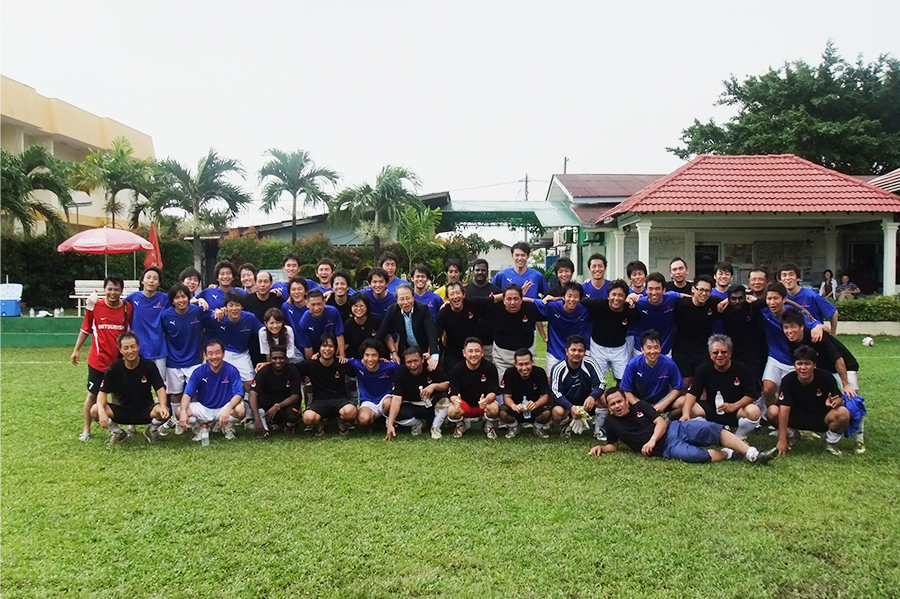
We practiced three times a week, including weekends. I served as captain, leading nearly 30 members, and joined overseas expeditions to China, Thailand, and Malaysia. I stayed active for about 10 years, until just before my assignment to Norway. The experiences and lessons from that time greatly benefited my business career later.
The First Step to Gaining Trust
I heard you requested to join the salmon farming business yourself.
Yes, since my third year (2006), I’ve been involved in the marine products business. In 2014, I learned that a neighboring team was involved in the M&A of Cermaq, one of the world’s largest salmon farming companies. I strongly wanted to be part of such dynamic business, so I requested a transfer. After gaining experience managing investments at headquarters, I was seconded to Cermaq’s headquarters in Norway in May 2016, which had become a subsidiary of Mitsubishi Corporation.
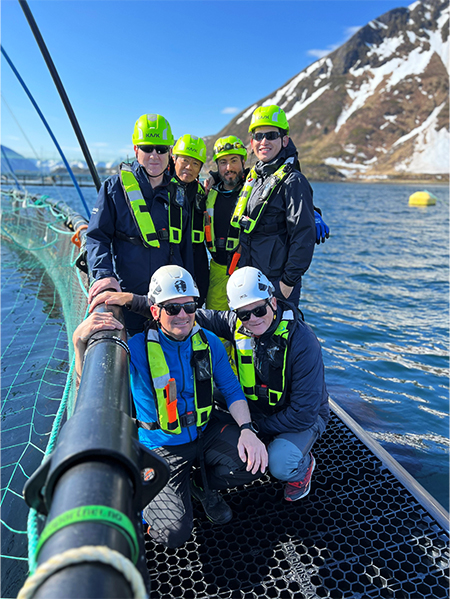
My role was an Assistant to CEO —I was the first Mitsubishi Corporation secondee to hold a position under CEO. At first, I sensed uncertainty about how to utilize me and an atmosphere of “Let’s see what you can do.”
*Cermaq
Cermaq is a salmon farming company producing about 200,000 tons annually in Norway, Chile, and Canada. Official name: Cermaq Group AS. Established by the Norwegian government in 1994, it became a wholly owned subsidiary of Mitsubishi Corporation in 2014. In FY2025, it acquired businesses under Grieg Seafood. Annual production is expected to reach about 280,000 tons by FY2027.
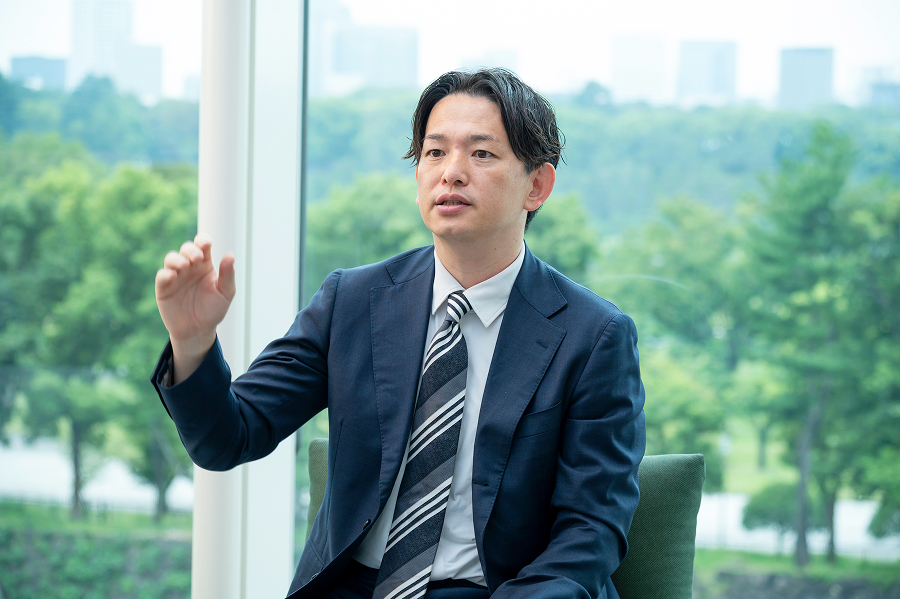
Wasn’t it tough being overseas for the first time in a new role?
What surprised me most in Norway was the emphasis on working efficiently with small teams. If you weren’t needed for a project, you simply weren’t invited to meetings or copied on emails. In Japan, you can catch up by reading widely shared emails, but not there. It was hard to get involved at first.
Regardless of my title, I knew I had to prove I was a “useful presence.” So I started by taking on labor-intensive tasks—preparing materials, compiling complex data, managing progress, and handling communication and negotiations.
How did things change after that?
One day, when we needed to present a project overview to management, I suggested, “Should I explain?” and was accepted with “Masa (my nickname) understands the big picture best.” By consistently supporting the team, I accumulated knowledge and gained trust. I always try to judge the right moment and shift gears when it counts—something I remain conscious of today.
That project involved consolidating global procurement of farming equipment and feed, previously handled regionally. The system we built then is still in use. Through my three and a half years in Norway, I gained confidence that I could stand alongside industry professionals.
Was communication in Norway in English?
Mostly English in business, but I also studied Norwegian after arriving and became comfortable with everyday conversations. Cultural differences exist, but I valued approaching others and adapting to the Norwegian way.
Chile: Tackling Challenges with Facts
After Norway, you were assigned to Chile in 2019.
I was seconded to Cermaq Chile, a subsidiary, and soon became CFO and Deputy Managing Director . Chile is the world’s second-largest salmon producer after Norway. However, Cermaq Chile’s profitability was at the bottom of the industry at the time. Production efficiency and competitiveness were low, and the company was running large monthly deficits. I was dispatched from Norway headquarters in a situation where urgent change was needed.
In soccer terms, you were like a coach rebuilding the team.
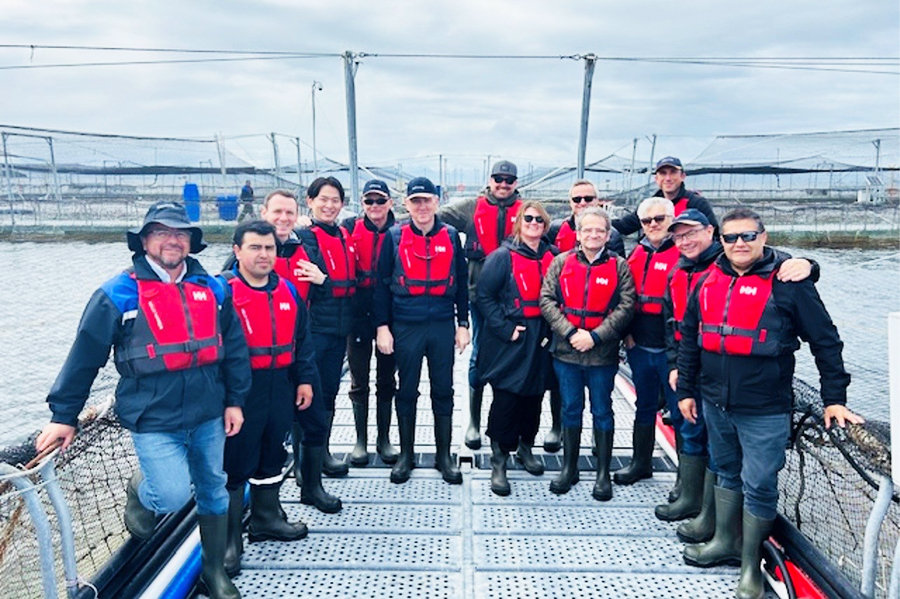
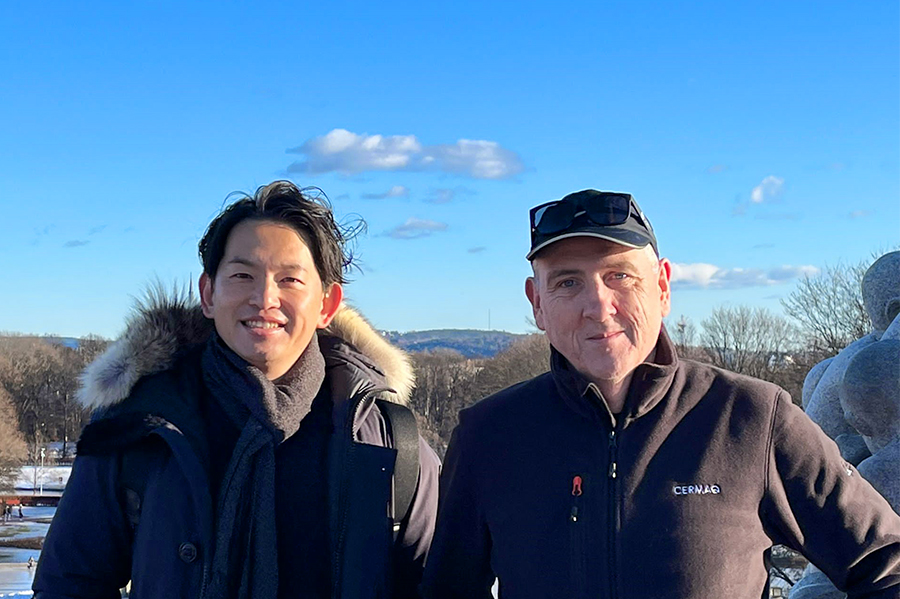
Yes. The president who came to Chile with me was Steven, a Scotsman nearly 20 years my senior. He was a seasoned professional with deep industry experience, and I had known him from my Norway days when he served as Managing Director of another company. He was recruited to turn around Cermaq Chile’s struggling operations and arrived at the same time as I did.
Shortly after arriving, I made a major mistake at work. I realized it after receiving a late-night call from Steven and felt my blood run cold. I immediately apologized and said, “I understand it’s hard to trust someone who made such a mistake. If you tell me to leave Chile, I’ll accept it.” We spoke for a while, and finally he said, “I accept your sincere apology. From tomorrow, don’t talk about this anymore. What we need to do is not dwell on it but move forward.” The mistake never became a big issue, but I was impressed by his depth and humanity. Steven was both a boss and a trusted friend—the person who influenced my career the most.
Steven often used the phrase “Less is more.” For him “less” meant simplicity. Cermaq Chile faced countless management challenges—100 or 200 things needed attention. Instead of trying to do everything, we focused on what mattered most at that moment. That approach drove high performance. It was also about deciding what not to do, a mindset I value greatly, both then and now.
With that phrase in mind, how did you rebuild the company?
What I tackled in Chile was truly operational work. Salmon farming deals with living fishes and nature, and conditions change daily, including farming environments, market trends, and fish health. Every day, we had to make precise judgments: how much feed the fish consumed, how much they grew, how many tons should we harvest, in what product mix and where we should sell. For example, if a salmon had a slight scratch, instead of selling it as a whole fish, we could process it into fillets or small portions to remove the blemish and sell it as first grade . These small decisions added up, improving margins and efficiency.
However, many long-time operational workers had their own methods and pride. Whenever I proposed changes, I often heard, “You wouldn’t understand, but this is how things are done here.” This happens in any industry. My approach was simple: base discussions on facts. I said, “It may be tough, but the fact is, the current way isn’t producing results. Let’s start by changing the approach and spend more time thinking about how to improve.” Through persistent dialogue and collaboration, trust grew, improvements became visible, momentum built, and the organization advanced. I truly felt the dynamism and power of teamwork.
I heard you also studied Spanish.
In Chile, not many colleagues spoke English, so after work, I studied Spanish intensively with a tutor five times a week. Soon, I could handle meetings and speeches entirely in Spanish. There was a pressing reason for this. Cermaq Chile was in a tough situation, and there was a possibility of personnel restructuring. I believed that someone who couldn’t even communicate with the team shouldn’t oversee such changes. I wanted to handle it sincerely.
Did Cermaq Chile’s competitiveness improve?
Since my assignment in 2019, we tracked quarterly profitability per kilo against listed competitors. The numbers gradually improved, and in 2021, we finally ranked first. That morning, we waited for competitors’ earnings announcements, and my finance team verified the numbers. When confirmed, I announced, “We did it! We’re finally number one!” Everyone celebrated. I even messaged Steven on Teams. It was the best moment. Until my transfer from Chile, we maintained a top position in the industry.
When Colleagues Resonate with Each Other, the Organization Thrives
What makes an organization deliver results?
In the soccer club I mentioned earlier, I played forward, which is a glamorous position, but I wasn’t a star. I often supported others. I learned that winning close matches depends not only on starters, but also on the bench and supporters. When you shine a spotlight on those who contribute behind the scenes, the team gains momentum.
It’s the same in business. Creating conditions that help colleagues connect and resonate with each other builds momentum and boosts performance. Wherever I work, when good results come in, I make sure to tell people on the ground, “Thanks to your daily efforts, we achieved this.”
You worked at Cermaq for about eight years. Many people return to Mitsubishi Corporation after about three years overseas, but you stayed much longer. You must have strong feelings about it.
I truly like the salmon farming business. Borrowing the blessings of nature—the sea—and working with local communities and providing food to people worldwide is a wonderful, meaningful industry.
Although Mitsubishi Corporation sets secondment periods, I told Cermaq, “I want to aim for career advancement here.” After Chile, I returned to Norway to apply my operating experience at headquarters. Working every day with that mindset might help me earn trust.
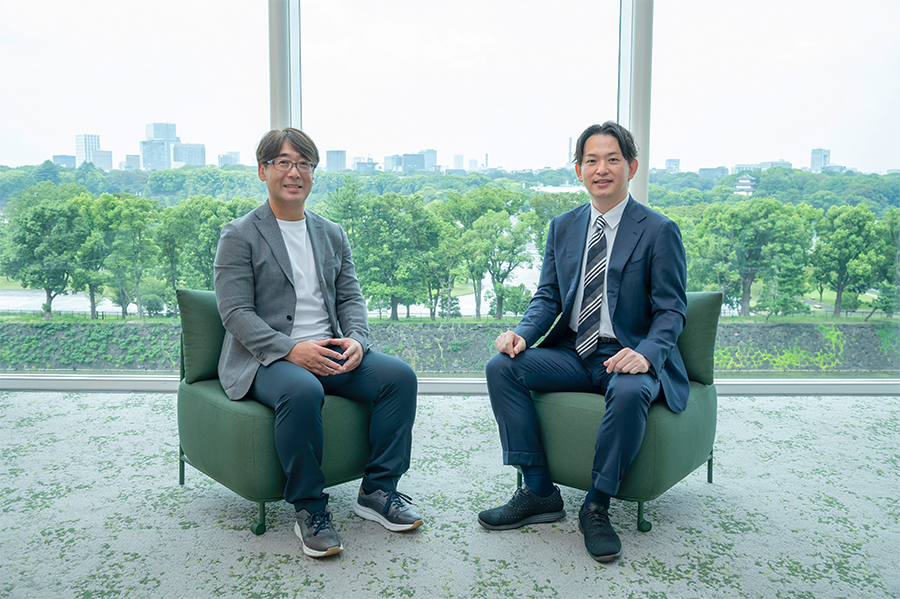
Since returning to Japan in 2024, you’ve taken on new challenges.
I now hold two roles. One is in the Corporate Strategy Development Office, where my mission is to promote business ideas across Mitsubishi Corporation’s business groups. The other is as head of the newly established Corporate Venture Capital (CVC) Promotion Office for startup investment since February 2025, exploring new technologies and promising businesses and investing to connect to future business development.
My goal is to communicate closely with each group and leverage my operational experience to design a roadmap from exploring new businesses to full-scale development.