Admiration for big projects “Don’t I seem Shosha-like?”

First, please tell us why you decided to join Mitsubishi Corporation.
I grew up in Fukuoka, where there was a summer homestay program that invited children from overseas. When I was in upper elementary school, children my age from Thailand and Micronesia stayed at my house, and we spent time playing together. I believe this was the beginning of my interest in overseas countries, especially in Asia.
In university, I majored in international relations within the law department. At the time, I had a vague aspiration: “I’d like to contribute to the development of emerging countries.” Around then, I met a Mitsubishi Corporation employee during an OB/OG visit, and their words resonated with me: “There are many ways to build an international career, but approaching it through business is one of the most sustainable.” I was fascinated by large-scale projects, so when I decided to join the company, I hoped to work in infrastructure.
After joining, were there things that surprised you?
Actually, friends and people around me often said, “You don’t seem like a typical ‘shosha person.’” At the time, I imagined trading companies were full of “powerful and energetic people” (laughs), so I felt a little anxious. But after joining, I discovered a wide range of personalities among employees, and my worries quickly disappeared.
One thing I struggled with was English. I could handle exam-style English but was bad at conversation, so I couldn’t keep up in meetings and was even afraid to answer the phone, worried it might be an international call. Over time, I gradually improved, but even now I still feel a little nervous talking to native speakers.
The big struggle on a business trip to India
“If you just sit there, you’re just a guest”
After joining MC, you were assigned to the infrastructure department as you had hoped.
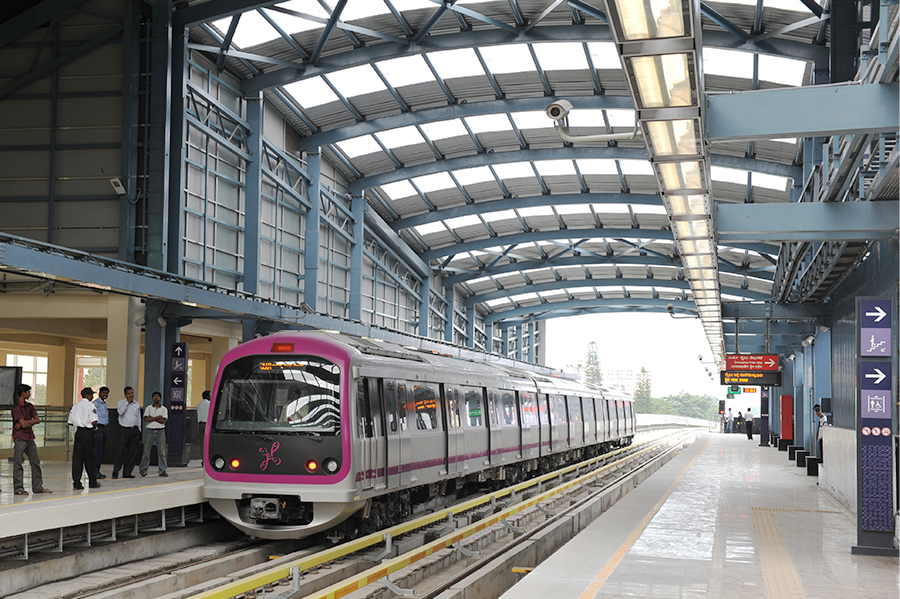
I was assigned to the Power & Electrical Systems Division, Transportation Systems Unit (now the Industrial Machinery Division, Transportation & Water Infrastructure Department). In my third year, 2003, I was in charge of our projects in India. At that time, metro construction was emerging as a new urban transportation system, and I was primarily involved in rolling stock supply contracts for the Delhi Metro and Bangalore Metro (*1).
*1 Delhi Metro and Bangalore Metro projects
Railway projects in India aim to address issues like traffic congestion and air pollution. The large-scale urban railway Delhi Metro, which connects India’s capital New Delhi and its surrounding areas, began operations in 2002. Bangalore Metro, serving Bengaluru—South India’s largest city—followed in 2011. Mitsubishi Corporation, in collaboration with local companies and Mitsubishi Electric, contributed to design, manufacture (including localization) and supply of rolling stock.
India in the 2000s was a time of rapid economic growth, wasn’t it?
My first visit was in 2004, and I could feel the city’s incredible energy amid rapid economic growth. It was crowded and lively, and I thought, “What an interesting country.”
That said, nothing went smoothly at first. In meetings, I would struggle to understand Indian English and couldn’t even take proper notes. I was overwhelmed by the energy of the people I worked with and couldn’t find the right moment to speak. My boss often warned me, “If you just sit there quietly, you’re only a guest.”
Eventually, I learned from those around me and found creative ways to adapt. I started presenting the agenda upfront by saying, “Today I want to discuss these items,” and closing with, “Let’s confirm today’s conclusions.” I was determined to deliver results. My boss and senior colleagues were strict but supportive, guiding me through those early challenging years.
After that, you oversaw Indian railway projects for about 10 years.
By handling various phases—bidding, negotiations, contracts, execution, office management, and nurturing local companies—I gained a solid foundation in this work. Winning the bids for Delhi Metro and Bangalore Metro, which I had managed from the bidding stage, gave me my first real sense of accomplishment.
What made me happiest was seeing people in India using the metro. It was even featured in travel guides as “Delhi’s new means of transportation,” complete with photos. Knowing that the work I contributed to made daily life more convenient and it will remain in this country for decades—that is the true reward of infrastructure projects.
Direct negotiations with the Mongolian Prime Minister
Lessons in negotiation learned from a tough situation
In 2014, you took on a new challenge in a field completely different from railways.
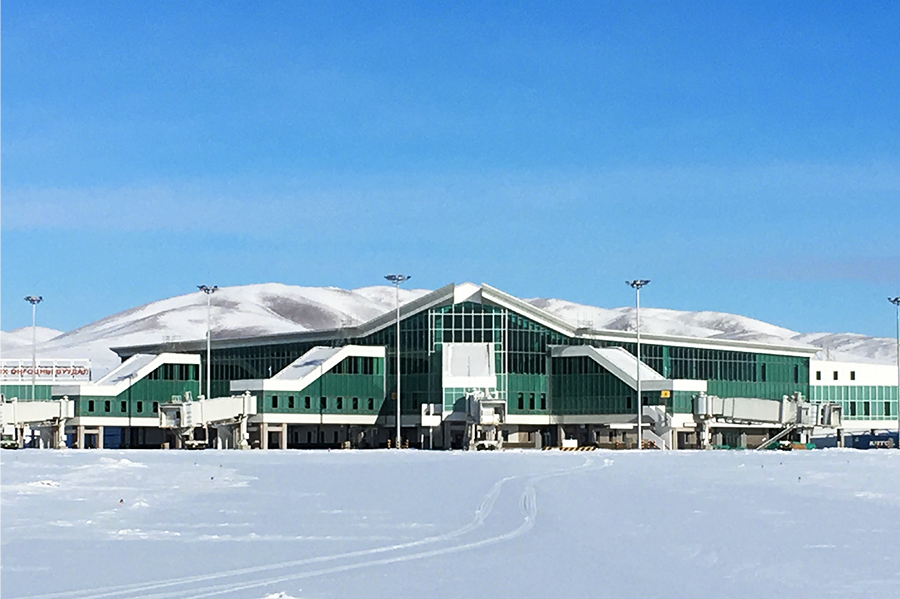
I became involved in the operation of Mongolia’s new gateway, New Ulaanbaatar International Airport (*2). The airport is operated by NUBIA, a company jointly invested in by four Japanese companies: Mitsubishi Corporation, Narita International Airport, Japan Airport Terminal, and JALUX, as well as a Mongolian state-owned company.
I served as the main person in charge of contract negotiations, coordinating among the four Japanese companies, liaising with the Mongolian government, and summarizing contract negotiations.
*2 “New Ulaanbaatar International Airport”
Built in Mongolia’s capital, Ulaanbaatar, to meet growing aviation demand, Chinggis Khaan International Airport was constructed with yen loans and stands as a symbol of cooperation between Japan and Mongolia. For the first time in Mongolia’s history, airport operations were entrusted to private companies under a concession contract. The airport officially opened in July 2021.
I heard that contract negotiations with the Mongolian government were particularly challenging.
At first, I was shocked by the differences in our sense of time and ways of thinking. Meetings rarely started on schedule, and when I tried to create a project timeline, I was told things like, “I don’t know about tomorrow.” At times, I felt they were holding back their true feelings, perhaps out of caution toward us.
Communication was also challenging because everything went through Japanese-Mongolian interpreters, which doubled the time required. When intentions weren’t conveyed accurately, I often felt frustrated. There were even occasions when negotiations dragged late into the night with disagreements still unresolved.
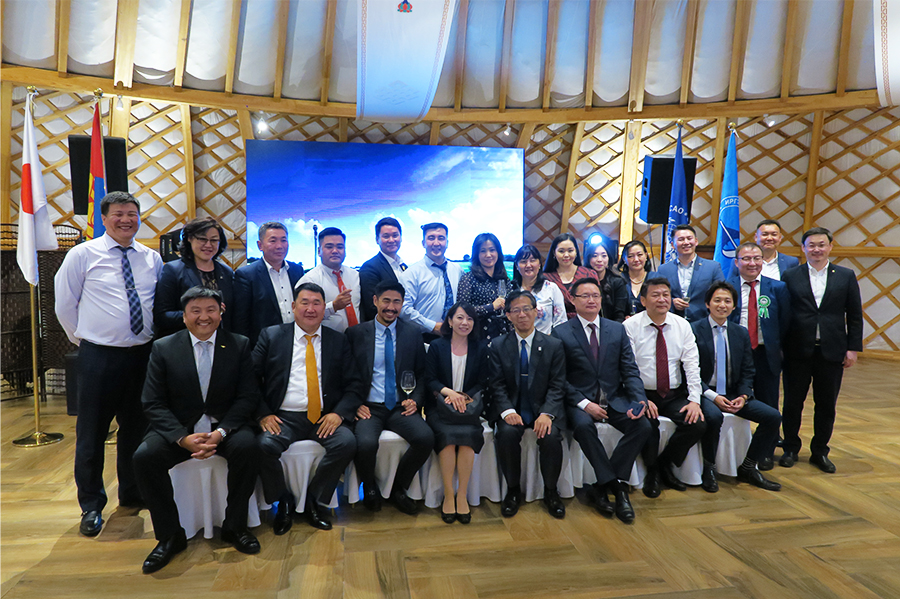
with negotiation teams from both Japan and Mongolia (courtesy of Ms. Kishikawa)
That sounds like a tough situation. How did you manage to break through?
Before bringing everyone together for a meeting, I took time to speak individually with the head of each party to understand their true feelings and explore how much each of us could compromise. Some things are difficult to express in a group setting, but by meeting one-on-one, we were able to reach a mutual understanding. This approach was actually recommended by a senior executive at Mitsubishi Corporation who has experience in construction of the new airport.
My guiding principle in any negotiation is to be honest and sincere. I don’t believe in hiding information or using underhanded tactics—and frankly, I couldn’t even if I tried. Approaching every discussion with honesty has likely played a key role in building trust.
Toward the end of the negotiations, you even went directly to the then Mongolian Prime Minister.
To finalize a concession contract with the Mongolian government, cabinet approval was essential. We lobbied each ministry, but securing the Prime Minister’s endorsement was critical. There were conditions we could not compromise on, and relying on second-hand information risked miscommunicating our intentions. Recognizing this, the Mongolian negotiation team proposed a direct meeting with the Prime Minister. Determined, I visited him alongside the Japanese ambassador to Mongolia and the Mongolian negotiation leader. Prime Minister Ukhnaagiin Khürelsükh (now President) was physically imposing and greeted us with a firm handshake before listening intently. Looking back, that meeting was the decisive turning point in concluding the negotiations.
Afterward, the airport operation concession negotiations, which had stretched over two years, were successfully finalized, and the contract was signed. At that moment, I felt an indescribable sense of achievement and joy.
In the toughest times, protect jobs until the end
—Farewell tears as colleagues saw me off
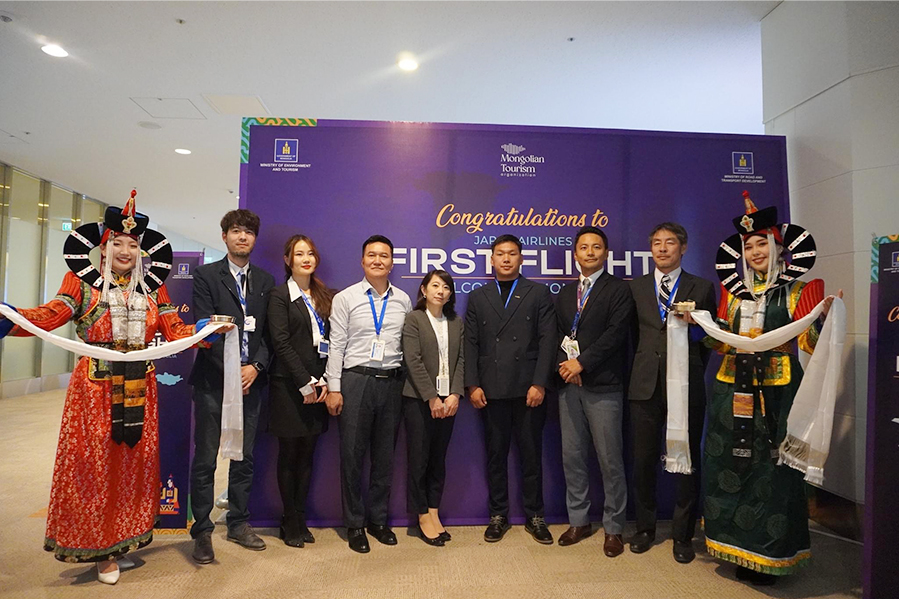
(courtesy of Ms. Kishikawa)
In December 2019, you started your assignment in Mongolia.
I was seconded to NUBIA—the operator of New Ulaanbaatar International Airport—as CFO and Head of Administration Department. Having led the contract negotiations, I was happy to continue contributing through operations of the airport.
However, just two months into the role, the COVID-19 pandemic struck. The airport’s opening was postponed by a year. For us, this meant maintaining the facility and paying salaries for roughly 300 employees with zero revenue. The cost reached several hundred million yen.
That was truly a crisis for the company’s survival, wasn’t it?
Exactly. We tried every possible cost-cutting measure, such as postponing construction and reviewing procurement, but it wasn’t enough. To keep the company afloat, reducing personnel costs, which accounted for about half of total expenses, became essential. The Mongolian government believed staff cuts were unavoidable to survive COVID-19, but we determined to avoid laying off employees who had joined NUBIA with the ambition of operating a great airport. I wasn’t alone; other management members felt the same. So, what could we do to protect employees? We carefully considered what would be fair and culturally appropriate for Mongolian employees, relying on the insights of Mongolian heads of department.
After much deliberation, we decided to introduce a three-days off per week and implement partial salary reductions. Still, we knew these cuts would impact employees’ lives, and I worried about whether they would understand the necessity. We spoke sincerely with union leaders, expressing my desire to overcome COVID-19 together and protect everyone’s jobs. By explaining the situation thoroughly to all staff, we were able to implement the changes smoothly. In the end, not a single person was laid off.
In July 2021, the new airport finally opened, a year later than planned. From there, we worked aggressively to attract airlines and succeeded in partnering with several carriers from Korea, Vietnam, and beyond.
What was your relationship like with the Mongolian employees?
It may reflect Mongolian corporate culture, but employees at NUBIA maintain very close relationships. There are frequent social events such as weekend trips and excursions. On one occasion, about 50 department members went to the suburbs for horseback riding and dog sledding on frozen rivers. Incidentally, I was the only Japanese member of the department; everyone else was Mongolian.
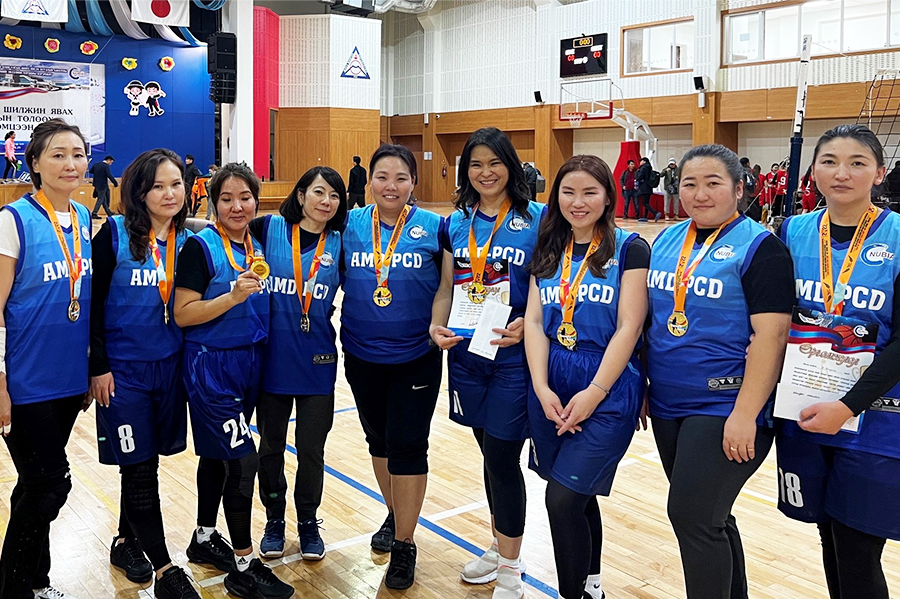
We also held in-house sports tournaments featuring volleyball, basketball, table tennis, and darts. The matches were highly competitive, and after the first set of volleyball, I was told, “Manager, please substitute yourself,”—a polite way of saying I wasn’t much help (laughs). After the tournament, I was invited to join practice sessions after work on weekdays. I even played table tennis with shift staff I hadn’t interacted with before. It was a lot of fun.
Your bold decision during COVID-19 must have built trust with employees. But since you fit in so well locally, wasn’t it difficult to return to Japan?
During my last month before returning, various people hosted farewell parties for me almost every day. At each one, I found myself in tears, saying “I don’t want to go back” (laughs). On the day of my departure, all the employees gathered to see me off, waving at the plane from the office window next to the airport terminal. It was an unforgettable sight.
I hear you’re still overseeing airport projects. What do you want to do in the future?
After returning to Japan, I joined the Overseas Urban Development Division (now the Urban Development Division). Then, in April 2025, I moved back to the Transportation & Water Infrastructure Department, where I currently serve as Deputy General Manager overseeing all airport projects.
I’ve always wanted to be involved in projects from start to finish. Fortunately, that wish has largely come true—in Mongolia, I experienced the entire process from bidding and contract negotiations to operations. What remains is the final stage: returning the operating rights to the Mongolian government after the 15-year concession contract period. Negotiating the closure of a project is just as important as launching it, and I would like to take on that challenge. I believe it will be another significant milestone.