Excited by the Movie Armageddon
— Resource Business Is So Cool!

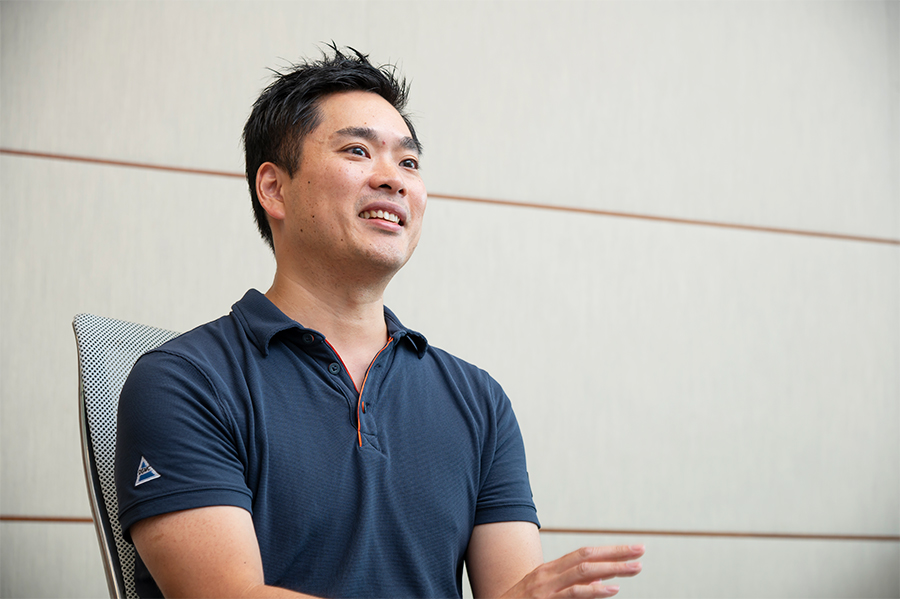
I heard you’ve been interested in world events since childhood.
Yes. My father worked in broadcasting, so overseas news on BS TV was always playing at home. International affairs often came up at the dinner table. Naturally, I became interested in world events and the media that report them. As a student, I even worked part-time at TV and radio stations.
The early 2000s were full of events that shook the world—9/11, the Internet bubble, the Enron shock. I was studying commerce at the time, and as my interest in business grew, I realized I wanted to be a player on the field, not just report from the sidelines.
So, you decided to go into business. Why did you become interested in the energy industry?
Japan is a resource-poor country, heavily dependent on imports for energy, a challenge that will never go away. That reality, combined with my desire to support Japan from the ground up and be a bridge between Japan and overseas, led me toward the energy industry.
And honestly, movies played a role too. I love films, and the massive offshore oil platform in Armageddon left a lasting impression. If you’ve seen the scene where Bruce Willis plays golf on the rig, you’ll understand—it struck me as grand and cool! Childish, maybe, but it planted a seed.
In the end, you joined a different general trading company after graduation.
Yes, I joined the energy division and spent seven years on foreign exchange operations and new LNG (liquefied natural gas) projects. That experience gave me a solid foundation. But my responsibilities were narrow, and I felt a gap between my dream of managing projects and creating new ones. So, I decided to gain the skills I lacked and pursued an MBA.
Studying for an MBA and Training at a Securities Company
— Career Hire at Age 36
How was your MBA experience?
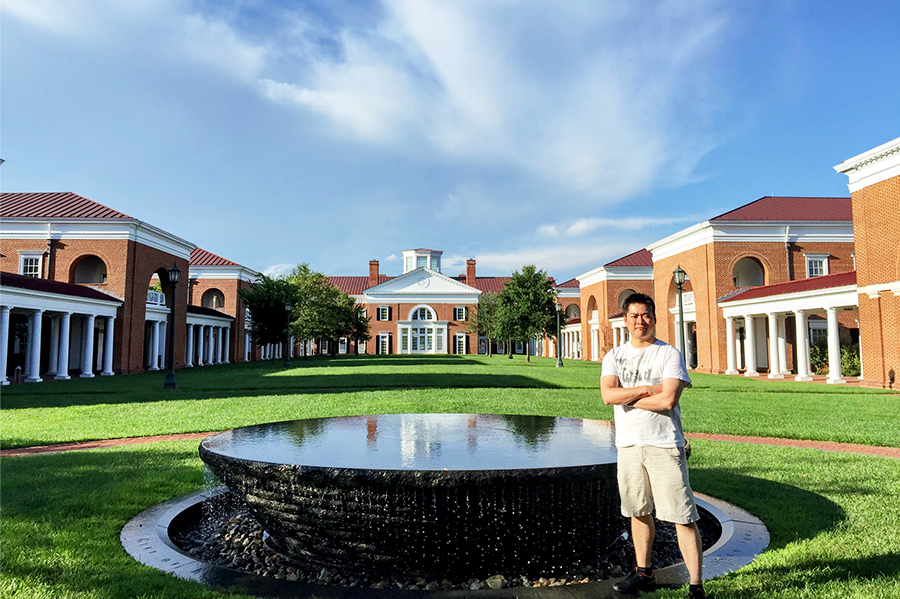
I studied at the University of Virginia’s Darden School of Business starting in 2015. Classes were rewarding but intense—very fulfilling, but there was a huge amount of homework every day. What kept me going was my clear goal: to develop management-level judgment and financial skills. Through new learning and diverse encounters, I discovered the thrill of pioneering the unknown.
Before finishing my first year, I quit my job to gain practical experience in finance. It was financially tough, with tuition and other costs, and my wife was pregnant at the time. I had no safety net, but I thought, “If I don’t do this now, I’ll regret it.” That period was a major turning point, and I’m truly grateful to my family for their support.
After that, you joined a securities company.
Yes, after getting my MBA, I joined one of America’s largest securities companies. In the investment banking division, I handled technology, media, and food industries. It was grueling, but incredibly rewarding. After two and a half years, having acquired the skills I wanted and considering work-life balance, I decided to move on to the next step.
Why did you choose Mitsubishi Corporation as your next employer?
I wanted to leverage my experience to build businesses that generate economic value and contribute to Japan. Trading companies offer vast opportunities, and Mitsubishi Corporation stood out for its leadership role in new energy projects, so I took the leap.
After joining at age 36, was there anything that surprised you?
I remember my first day well. Normally, on your first day, you’d expect an explanation of the company and to set up your computer, right? Instead, by 10 a.m., I was handed a contract and told, “As our negotiation lead, please close this in a month.” It was a deal worth up to one trillion yen. Even as a career hire, I was surprised they’d entrust such a thing to a newcomer (laughs). But looking back, being given such opportunities accelerated my growth.
I also felt the strong culture of mutual support. Bosses help subordinates, colleagues help each other, and even juniors help seniors. With that contract on my first day, I received a lot of help from those around me.
From the outside, Mitsubishi seemed like a rigid organization. But inside, I found a culture that values consensus and respects individual opinions. Even as a newcomer, my ideas were heard, and that meant a lot.
Long-Awaited Assignment in Canada
— Facing Serious Situations
What kind of work have you done at Mitsubishi Corporation?
At Mitsubishi Corporation, I’ve followed a career path moving upstream along the LNG value chain. In my first year, I negotiated long-term contracts to sell Canadian LNG to Japanese companies. In my second year, I managed the LNG investment business from Tokyo, and in my third year, I was finally assigned to Calgary, Canada. As Vice President of Diamond LNG Canada, a Mitsubishi subsidiary, I spent two and a half years overseeing the LNG Canada Project (*).
* LNG Canada Project
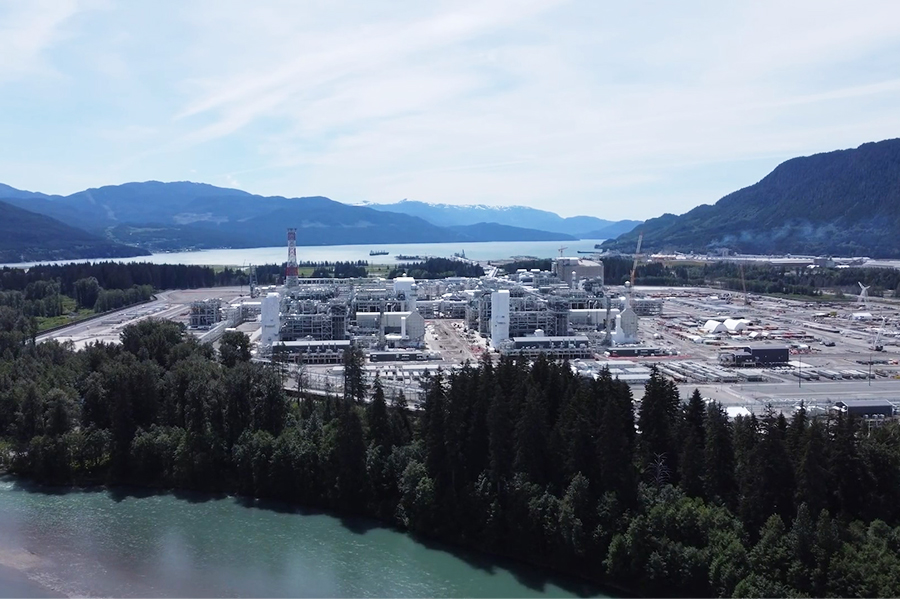
Canada’s first large-scale LNG project. Located in Kitimat, British Columbia, the facility has an annual capacity of about 14 million tons, supplying LNG mainly to Asia. The first shipment departed on June 30, 2025, local time. LNG and natural gas, which are relatively low-impact energy sources, are being reaffirmed as realistic solutions for the transition to a decarbonized society.
The LNG Canada Project is a very large-scale project, isn’t it?
Its goal was to create a comprehensive natural gas value chain, stretching from production in Canada to homes and factories in Japan and East Asia.
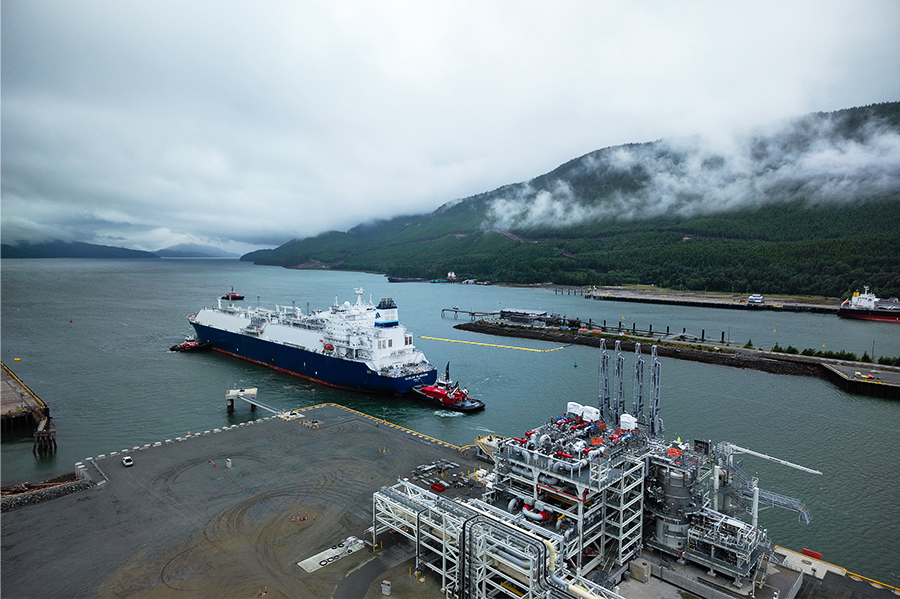
We began by building gas production facilities on Canada’s inland plains, followed by a new 670-kilometer pipeline, roughly equivalent to the distance from Tokyo to Aomori. We also built a liquefaction plant capable of cooling gas to -162°C, along with shipping facilities. Several 300-meter-long LNG carriers were also built to transport the gas across the Pacific.
The liquefaction plant became the largest private investment in Canadian history, costing $14 billion USD (about 2 trillion yen), while the pipeline cost $14.5 billion CAD (about 1.5 trillion yen). The project was backed by five global leaders: Mitsubishi Corporation, Shell (UK), PETRONAS (Malaysia), PetroChina (China), and KOGAS (Korea)—a true “all-star” team.
But when you actually went to the site, there were many problems...
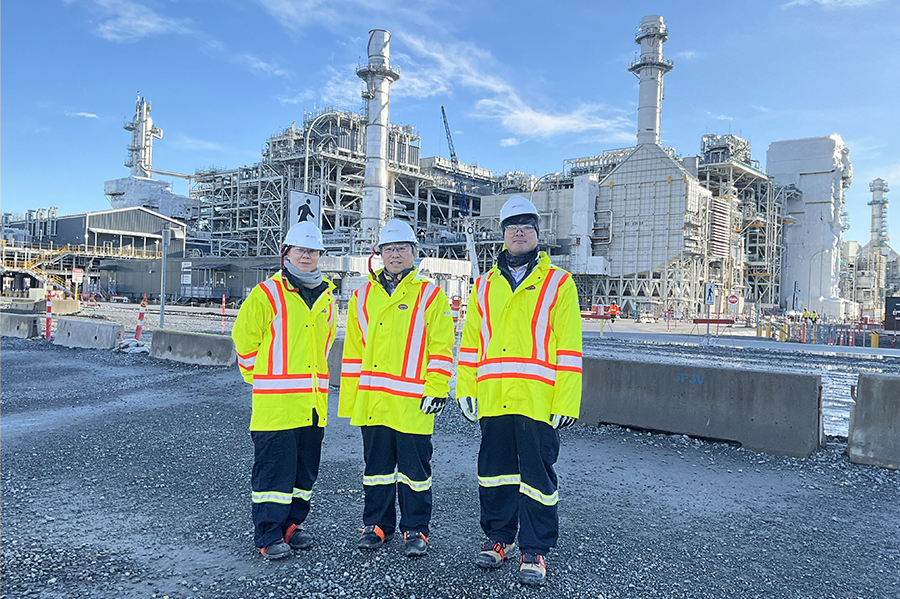
I went to Canada in early 2022. The project had already been underway for three and a half years, but construction of the liquefaction plant and pipeline was stalled, and there was a real possibility that production would be delayed by several years.
To make matters worse, 2022 was still during the COVID-19 pandemic. Labor restrictions were in place at all sites, and the production of parts and plant construction faced further delays. In the LNG business, which relies on a global supply chain and highly complex processes, the impact of COVID was enormous.
Because this was such a large-scale project, the economic damage from construction delays was significant. At this pace, achieving the expected investment returns seemed unlikely, and any delay in LNG supply risked losing stakeholder trust. I felt that if I let my guard down even for a moment, I would be overwhelmed by anxiety and pressure or swept away by a flood of problems.
“Take Initiative and Keep Going” — The Motto I Stuck To
It was really tough. What did you start with?
As a first step, I focused on learning everything I could. I attended all the project meetings that my team members participated in, sometimes spending an entire week moving between nearly 20 partner meetings. For contracts my team was negotiating, I read them thoroughly until I could handle them myself. I also listened to my team members’ concerns and worked with them to find solutions.
It may be overly simplistic, but my motto is “take initiative and keep going.” Sometimes good ideas are born in that process, and relationships with those around me form. In fact, within six months, partner companies began seeking my advice, and I felt confident I could make a real impact.
Building consensus among the five partner companies must have been tough.
The five partners differed in country, business focus, company constraints, and circumstances. Each had high expectations and tended to prioritize its own interests. At this pace, we risked falling into a deadlock where progress would stall because we could not reach agreement.
To break through, we worked hard to present possible scenarios and explain how overall optimization of the project would also lead to individual benefits for each company. For example: “If we deploy X hundred highly skilled personnel now, it will cost X million dollars, but we can accelerate the schedule by X months. This will improve investment returns by X% and shortening the construction period by X months will save X million dollars in the budget.”
The process of explaining, discussing, and implementing was painstaking, but providing business-driven solutions is one of Mitsubishi Corporation’s core values and we embraced that challenge.
Difficulty in building consensus and problems at every stage are issues that can happen in any business, but what do you think is especially important?
On projects with multiple companies, drafting concrete proposals is essential. A clear draft helps partners define what they can accept and find compromises. But if the draft only serves your own interests, you’ll lose trust. Daily communication is key to understanding each partner’s position.
Also, when problems multiply, symptomatic fixes waste resources. Align everyone’s focus as an organization first, then act strategically—limit the area where you invest your wisdom.
You appear to handle adversity well. How do you deal with pressure and stress?
I used to be a worrier. When I was new, if I had a major task coming up on Monday, I’d start feeling anxious as early as Saturday evening, not just Sunday.
What changed me was discovering fishing as a hobby and learning how to truly switch off. Surrounded by beautiful seas and mountains, I can reset my mind and recharge both mentally and physically. I became so passionate about fishing that I even traveled to Alaska. Later, when I was stationed in Canada, skiing with my family became another favorite pastime.

These hobbies reset my mind and keep me resilient. Over time, I learned that the bigger the pressure, the greater the sense of achievement and joy after overcoming it.
The LNG Canada Project finally made its first shipment in June 2025.
On June 30, local time, the first LNG shipment left Canada. Though I had already returned to Japan by then, hearing “We did it!” from former teammates filled me with relief and pride. From now on, we’ll supply about 2.1 million tons of LNG annually to customers in Japan and Asia.
Since spring 2025, I’ve been managing investments in an LNG project in Australia, expanding a 40-year legacy and launching new developments. Another big challenge has begun.