A Major Miscalculation born from a "Seller's Self-Centric Mindset"

Why did you choose to work for a Japanese general trading company (sogo shosha).
My father had a significant influence on me. He worked for a Japanese trading company dealing with materials such as cement, wood chips, and pulp. Because of his overseas assignments, I spent part of my childhood abroad. I lived in Saudi Arabia from age three through kindergarten, and later in South Africa from sixth grade until ninth grade.
The time I spent in Johannesburg during those formative years is especially memorable. At first, I couldn't understand English at all and naturally struggled, but life there was still incredibly fun. For our school trip, we went camping in a national park that looked like a savanna and were surrounded by wild animals.
My father didn't talk much about work at home, but occasionally he would teach me about environmental and energy-related businesses or show me real wood pellets, which are solid fuel made from wood. Those small glimpses into his world gradually shaped my own aspirations. I began to develop a desire to contribute to society on a global scale, which eventually led me to pursue a career at a general trading company.
Since joining Mitsubishi Corporation, you have spent most of your career in the automotive business.
I joined the company in 2007 and was assigned to the Automotive Business Division. After working on trade operations, ordering, and shipping for the Indonesian market, I was seconded to PT. Krama Yudha Tiga Berlian Motors in Indonesia in 2010. Beginning in 2012, I took on a product planning role for the Indonesian market, where I worked to advance planning and development in coordination with local stakeholders and Mitsubishi Motors.
At that time, strengthening the passenger car segment was one of the major challenges for our business in Indonesia. For many years, we had been strong in commercial vehicles such as trucks, but our passenger cars lagged behind competitors. Our market share remained around only 2 to 3 percent. Although the Pajero Sport became a hit, the Outlander Sport (known as the RVR in Japan), which had been expected to become the next big product, struggled to gain traction.
So you set out to perform a minor model change for the RVR?
The most frequent complaint from users was that the backrest of the rear seat was too steep. Although the design prioritized maximizing trunk space, it didn’t align with the needs of customers in Indonesia—where people often travel in larger groups compared to Japan or Europe—the seats reclining wasn’t enough and were uncomfortable for passengers.
To address this, we consulted with the product planning and development teams at Mitsubishi Motors and adjusted the angle of the rear seats. We also updated the design of the front grille and audio panels, and then relaunched the vehicle as an improved version.
However, even this updated model did not produce the results we hoped for. We formed a task force to address the situation, but sales still did not recover. It was a difficult period. Looking back now, I think there was an element of what I would call seller's self-indulgence. We assumed that fixing the points of dissatisfaction would automatically lead to higher sales, and we failed to truly listen to the voice of the customer.
Uncovering the Reality of Car Usage Through Frequent Visits to Shopping Centers
That bitter experience was then applied to the product planning of the new model.
Beginning in 2013, we started work on Mitsubishi Motors' XPANDER project, a new model developed with Indonesia as its primary market. The project was a major opportunity for our business in Indonesia, and I was determined to listen carefully to the market and create a product rooted in local life and culture.
To understand how people actually use their cars, I conducted customer research together with the development and product planning teams from Mitsubishi Motors. We spent a significant amount of time observing behavior at shopping center drop-off areas and parking lots. We watched who was driving, how many people got out, where they had been sitting, and what kind of luggage they carried. We repeated these observations nearly 30 times.
Was this an effort to apply the lessons learned from the earlier case of what you described as "seller's self-indulgence?"
With a mindset of doing everything we possibly could, we conducted surveys, interviews, and home visits to see users’ lifestyles firsthand.
One interesting discovery was that many people keep shoes in their cars. People in Indonesia often carry different shoes for the office, exercise, or going out, which are separate from the shoes they wear while driving. This insight led to the XPANDER being designed with a generous trunk storage space specifically for shoes.
We also visited popular local furniture stores. The perception of luxury in Indonesia differed from our own assumptions, so we studied high-end furniture to better understand the designs and textures that resonated with our target customers.
By directly experiencing the lives and needs of our users, every member of the project team was able to build what I would describe as a high-resolution customer profile, which I believe was extremely valuable.
Struggles Over the Engine: Words from the development team provide support
However, I understand there were concerns regarding the engine.
The initial plan was to equip the car with a 1.2-liter engine that was already used in other small ASEAN cars because of cost and platform constraints. However, competitors were using 1.3 to 1.5-liter engines, which were perceived locally as more powerful and more premium. I felt that if our engine appeared inferior in size and performance, it would be extremely difficult for us to compete as a latecomer.
Furthermore, the driving tests highlighted additional issues...
In a popular leisure area in southern Jakarta that has many slopes, we tested a car loaded to match the XPANDER’s intended weight. The 1.2-liter engine struggled to climb the hills.
Although the development team made improvements, my concerns remained even after re-testing in Japan. Some colleagues suggested compromising so that the project could move forward, but I wasn’t ready to compromise. One member of the development team encouraged me by saying it was okay to say "no" if the improvements were still insufficient. Another team member proposed a breakthrough idea that made it possible to install a larger engine despite design constraints.
Believing that even a small possibility was worth pursuing, I appealed directly to the development leader. Later, I received a message saying, "We've made it possible to install the 1.5-liter engine!". I was so happy that I remember doing a big fist pump on the spot.
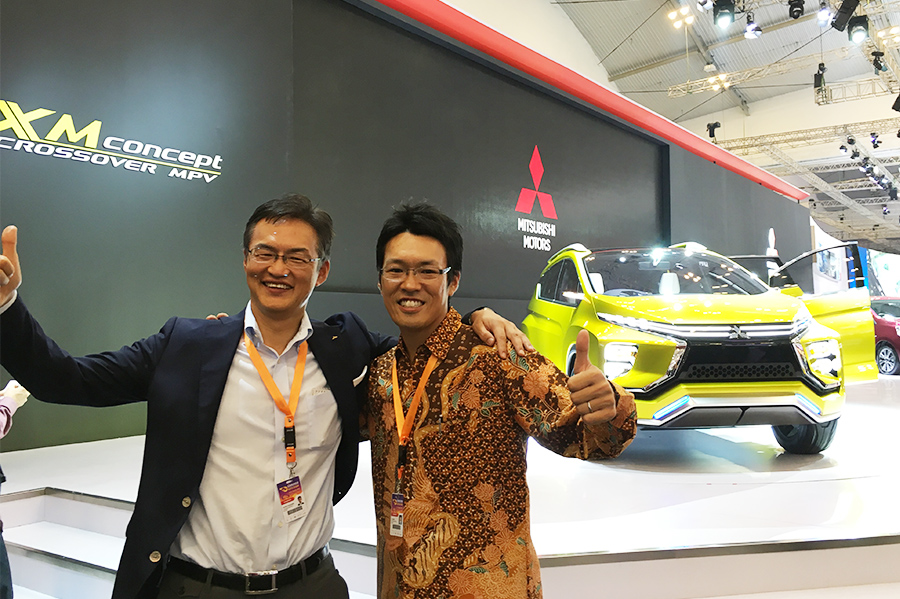
(courtesy of Mr. Kusano)
How was the reaction to the XPANDER?
Although I had already returned to Tokyo about a year before the launch, I wanted to see it with my own eyes, so I took vacation time and traveled to Indonesia with my family.
At the motor show, I was amazed. A massive crowd had gathered around the Mitsubishi Motors booth—I had never seen anything like it. I heard that for a long time afterward, orders for the XPANDER were flooded and there was a long waiting list for delivery.
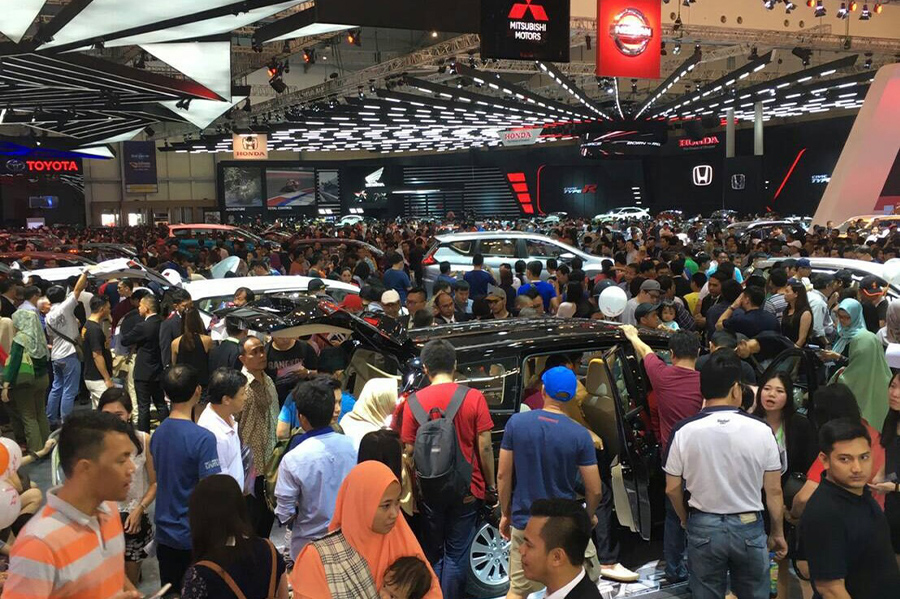
(courtesy of Mr. Kusano)
Did you believe in the success of the XPANDER from the beginning?
Initially, there were voices within the company that questioned whether we could succeed in selling passenger cars. However, I was determined to achieve results and believed fully that we could make it happen.
A year before the launch, we announced the slogan "Brand New Day," which represented our own resolve that our business in Indonesia was entering a new stage. As the project progressed, the company gradually united, and I felt the number of supporters gradually increase.
I remain deeply grateful to the wonderful colleagues and Mitsubishi Motors development team members who made this success possible. To me, they are heroes.
A Difficult Decision: Ending Dealer Contracts
Since 2018, you were assigned to Vietnam.
The Vietnamese market was expected to grow, and Mitsubishi Motors Vietnam (MMV) needed to strengthen its sales structure. I was excited to be involved with the XPANDER again—this time from a sales perspective.
When you arrived, did you feel there were challenges in the relationship with the dealers?
The atmosphere at the first national dealer conference was not good. Several executives expressed strong frustrations toward MMV. To understand the issues firsthand, I visited all 30 dealers across the country. I found that while some dealers were working sincerely, others were making little effort and only voicing complaints.
I believed that leaving this situation unaddressed would hinder MMV's long-term growth, so I decided to directly confront the low-performing dealers. We created action plans and spent a year tenaciously reviewing performance. Despite these efforts, some dealers showed no improvement, and we eventually reached the difficult decision to terminate their contracts.
Terminating a dealership is a serious step. Both I and my Vietnamese colleagues faced harsh words and intense pressure. However, one Vietnamese staff member told me, "I understand this is necessary for the future of this company. I will follow you". That was the moment I reaffirmed my resolve to see things through with sincerity.
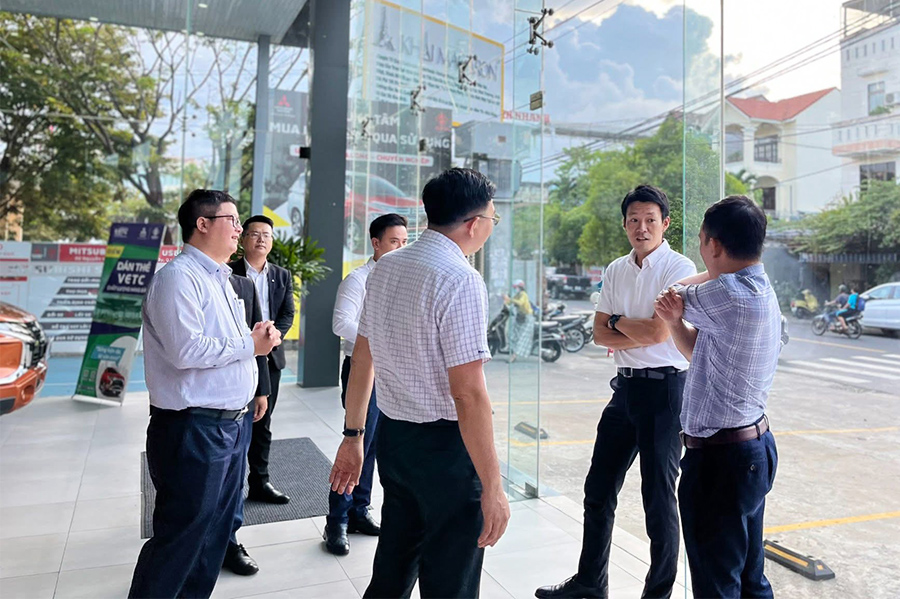
with patience and persistence (courtesy of Mr. Kusano)
You also encountered the COVID-19 pandemic during your stay in Vietnam.
Beginning in July 2021, a three-month lockdown left the town deserted.
My primary concern was for the dealers and employees who had been forced to suspend operations. We conducted online meetings to understand their needs and implemented measures such as incentives for online sales to help reduce their burden. When the pandemic eventually subsided, dealer executives told me they appreciated MMV's willingness to listen, which reaffirmed for me how important it is to stay close to the front lines.
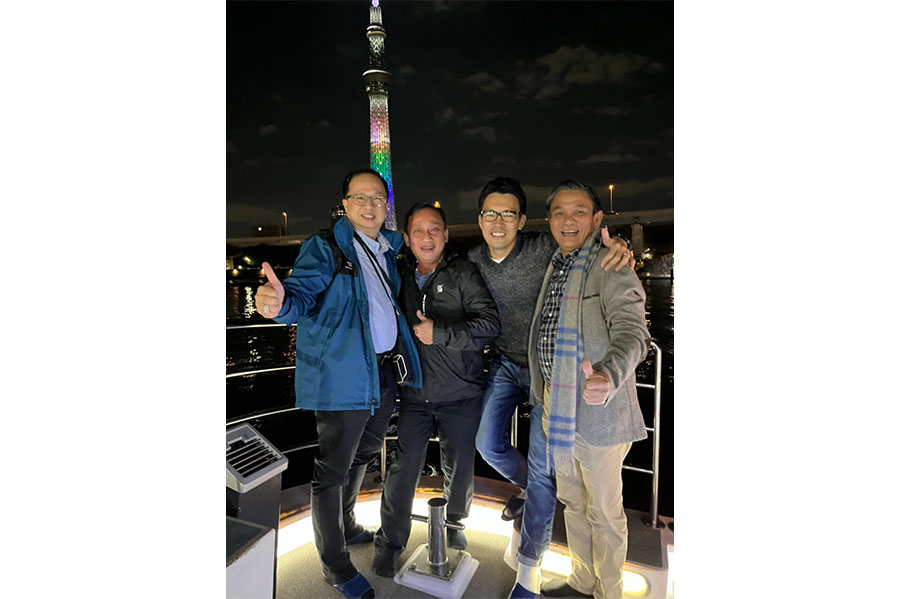
"People in Vietnam love to socialize over drinks."
(courtesy of Mr. Kusano)
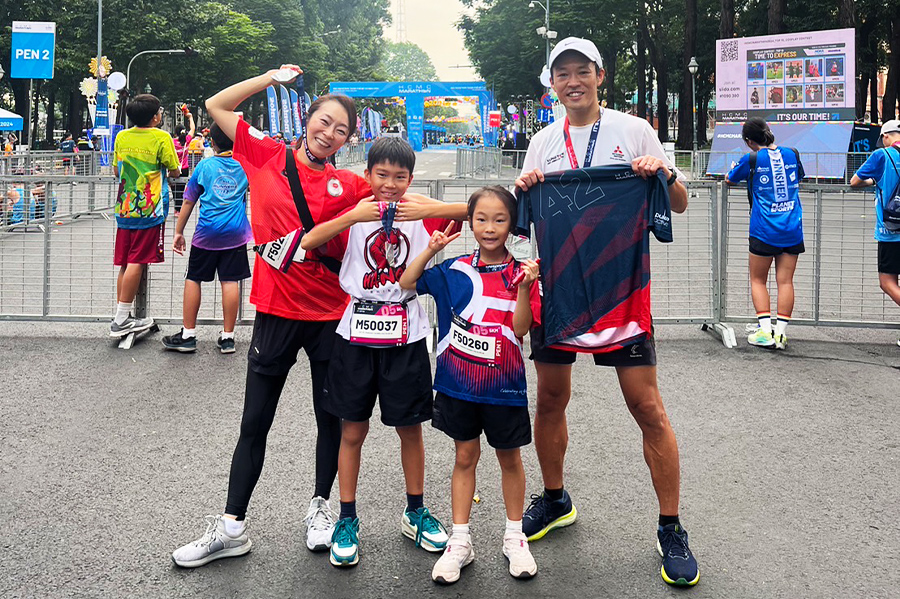
During my six years in Vietnam, Mitsubishi Motors' market share grew from 2 to 3 percent to approximately 13 percent, and the XPANDER became the best-selling car in Vietnam for two consecutive years. I am deeply grateful to my colleagues at MMV and to the dealers. When I left Vietnam, they prepared a decorated cake with a message “Thank you Kusano” and “Congratulations on XPANDER No.1!” which I was deeply touched.
Since 2024, you have taken on a new role in Japan.
I am currently part of the Next Generation Mobility Business Development Department, where my main focus is on regional transportation within Japan. One of our key initiatives is the AI On-Demand Bus.
Today, many regions in Japan are struggling to maintain traditional fixed-route bus services. The AI On-Demand Bus system allows users to book a ride via an app and travel from their preferred pickup point to their destination at a time that suits them. Because the AI generates the most efficient routes in real time based on ride-sharing demand and traffic conditions, it helps reduce travel time. In addition, since the buses operate according to actual demand, this model helps reduce operating costs and reduced CO2 emissions. These efforts are gradually expanding across Japan; in projects involving Mitsubishi Corporation, the system has already been introduced in approximately 80 regions.
No matter how convenient the digital world becomes, I believe that physical movement—people traveling—is what truly revitalizes both communities and individuals. Drawing on my past experiences, I am committed to helping address regional challenges from the perspective of regional transportation.