Cheer Dance and Mitsubishi Corporation: An Unexpected Commonality

I understand you were deeply involved in dance during your student years.
I belonged to the dance club in both junior high and high school, and later joined a competitive cheer dance team at university. Beyond the excitement of performing as a team, I was drawn to the process itself. We would spend an entire year working diligently toward a single two-to-three-minute performance. That long-term commitment suited my personality well. Finishing second at the national competition in my final year of university remains a particularly meaningful memory.
During my job search, I often spoke with MC employees about my experience in cheer dance, and one of them told me, "I think the work of a trading company is quite similar." They explained that while trading companies are often seen as glamorous, the reality is that the works depends on steady, grounded effort accumulated over many years. That perspective deeply resonated with me. While we aren't manufacturers, the role requires a high level of creativity to generate new business from the ground up. That’s what drew me to Mitsubishi Corporation.
Since joining, your career has focused primarily on IT support and the promotion of Digital Transformation (DX).
I joined the company in 2007 and began my career in apparel sales within what was then the Living Essentials Group. Later, I requested a transfer to roles focused on IT support and DX promotion for the head office and group companies. At the time, many of the industries I worked with were still highly analog—for example, delivery slips were managed by hand on paper. I wanted to help address those challenges, and I also hoped to develop a specialized area of expertise that could become one of my personal strengths.
To be honest, I wasn't good with IT when I started. I was at the level of asking, "Protocol? What’s that?" But precisely because it was a weakness, I felt motivated to overcome it. I also felt a strong sense of mission to contribute to a field that would only grow in importance. After transferring, I was given many opportunities for training. Through on-the-job training and support from my superiors and colleagues, I gradually built my skills in IT and DX promotion.
Confronting the Challenges of DX: Human Intuition vs. AI
What specifically were your responsibilities?
I was responsible for improving and developing internal systems for MC and its group companies, with a primary focus on requirements definition—the foundation of system development.
One example involved improving warehouse operations for a company handling medical supplies. I visited warehouses to observe the flow of items such as syringes and gauze and interviewed on-site staff to understand pain points in the existing systems. At the time, particularly in the 2010s, many warehouse operations still relied heavily on individual experience and craftsmanship. We went through considerable trial and error to determine how digital technology could complement humans judgment, including the use of AI to improve demand forecasting.
In addition to this, I worked on a wide range of projects across multiple industries. These included system improvements in the apparel sector, efficiency enhancements in accounting operations for meat processing companies, and the introduction of RPA (Robotic Process Automation). Through these experiences, I came to understand how difficult it can be to change long-established practices on the ground. They also reinforced the importance of carefully aligning management’s intentions with the realities faced by frontline employees.
You were also involved in developing IT and DX talent, weren't you?
Because I was trained within the company myself, I wanted to apply what I had learned about which steps make learning easiest, as well as my empathy for those who find IT difficult.
Initially, I served as an internal instructor, teaching employees how to use MC's internal systems. Later, I became involved in defining the profile of "DX talent" that MC aims to develop, along with the digital skills required of trading professionals. I collaborated with external partners to plan and implement training programs for management and employees at various career stages. In addition, I designed and operated a training system for new IT staff and served as an instructor for new recruits.
It seems that your work in developing people led to a new dream.
Yes. I started thinking that I eventually wanted to work in HR focused on IT talent, and I shared that ambition with my supervisor. The opportunity came unexpectedly. In 2021, when the decision was made to establish a DX consulting firm, a former supervisor asked whether I wanted to take on responsibility for HR. I was so happy that they remembered my earlier comment and gave me the chance. I joined as a founding member on secondment and built the HR system—including job titles and compensation structures—from the ground up.
I devoted most of my energy to mid-career recruitment for DX consultants. Each applicant has their own life and is making a serious commitment when considering a career change. With that responsibility in mind, I approached every interview by asking myself whether this move would truly be a positive step for that person’s life. Although it was challenging to recruit people with far deeper expertise in the digital world than my own, I found great fulfillment in the work of connecting people and creating the foundations for their next chapter.
Rejoining After a Career Break: Navigating a Busy Life
Let’s go back for a moment. You left the company once, in 2012?
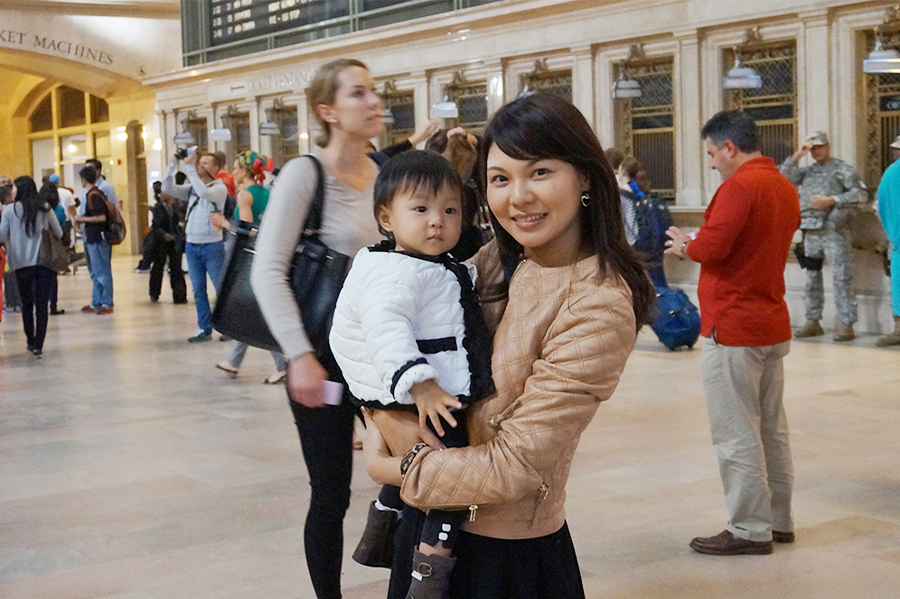
In my sixth year at the company, I decided to resign in order to accompany my husband on his assignment to New York. While there, I became pregnant and gave birth. I later returned to Japan with my daughter ahead of him. In 2015, when my daughter turned two, I rejoined the company through Mitsubishi Corporation's reemployment scheme for employees affected by spouse transfers (*1). During my three years away from work, my desire to return gradually grew stronger, so I was thrilled to be back.
*1 Reemployment scheme for employees affected by spouse transfers
This program allows MC employees who resign to accompany a spouse on a domestic or overseas assignment to be rehired under certain conditions. It is designed to enable returning employees to once again apply the experience and skills they have cultivated.
Was it difficult working while raising a child while your husband was overseas?
At the time, I was fortunate to have wonderful nursery staff and help from my mother. Of course, getting calls about fevers or colds was common. There was even one night where I stayed up caring for my daughter after she broke her collarbone playing on the monkey bars. It was physically demanding, but maybe my cheer dance training helped me get through it! (laughs)
It has now been 11 years since you returned to work.
My daughter is in sixth grade now and has become very reliable, but I still have my share of failures! I’ve completely forgotten about parent-teacher conferences, and have gone on business trips without realizing it was a day she needed a packed lunch. When she later told me, "I made my own lunch," I felt bad, but I was also impressed by how resilient children become when their parents are a bit scattered.
These days, she even looks through recipe books to make dishes like ginger pork or tamagoyaki (rolled omelets) for her cram school meals. It still hurts when she cries because of my overseas business trips, but she also tells me, "I want to be an adult like you, Mom, so I'll do my best." Hearing that truly sustains me.
My husband returned to Japan in 2016, but for the past two years he has been stationed in Mexico on his own, so it’s just my daughter and me again. My in-laws currently provide a great deal of support, such as looking after her when I'm away on business. Looking back, I realize I’ve made it this far thanks to the understanding and cooperation of my supervisors, colleagues, teachers, and family. I am truly grateful to everyone involved.
How do you view MC’s systems and culture when it comes to childcare?
The company’s systems are a huge help. Staggered working hours and the flextime system provide much-needed flexibility, and I am grateful for initiatives like childcare facilities and babysitter discount programs.
I also made use of the company’s Mentor System (*2) to discuss balancing work and parenting. My mentor once told me, "If there’s a job you want to do, don’t hesitate to say so. If I were your boss, I’d want to hear your passion first." That advice helped clear away my doubts.
*2 Mentor System
To support women's career development, executive officers or senior management from other departments serve as mentors to employees in leadership roles, engaging in regular dialogue.
What matters most to me is being entrusted with challenging assignments that allow me to maintain my passion for work. At one point, several major life events overlapped—raising a child while my husband was overseas and caring for my mother after she was diagnosed with an illness. It was a period of intense physical and mental strain. Even now, there are moments when balancing everything requires real perseverance. Still, the fact that the company continued to offer me significant roles and opportunities to challenge myself—while providing maximum consideration for my circumstances—has been deeply fulfilling from a professional standpoint. Because of that support, I’ve been able to keep moving forward without ever losing my passion for work.
Bringing Japanese Healthcare to the World: The Challenge Continues
What kind of business is the medical tourism project you are currently working on?
Medical tourism refers to people traveling abroad to receive medical care. We are developing an inbound healthcare business in which patients from overseas come to Japan to access high-quality, precision medical services. By making use of open slots at clinics, we generate new medical revenue while also contributing to the sustainability of Japanese medical institutions. Currently, we mainly provide health screening services. In the future, we aim to expand into "wellness tourism," where guests stay in Japan for one to two weeks, undergo medical screenings, and work to improve their physical and mental health through experiences such as sightseeing and Japanese cuisine.
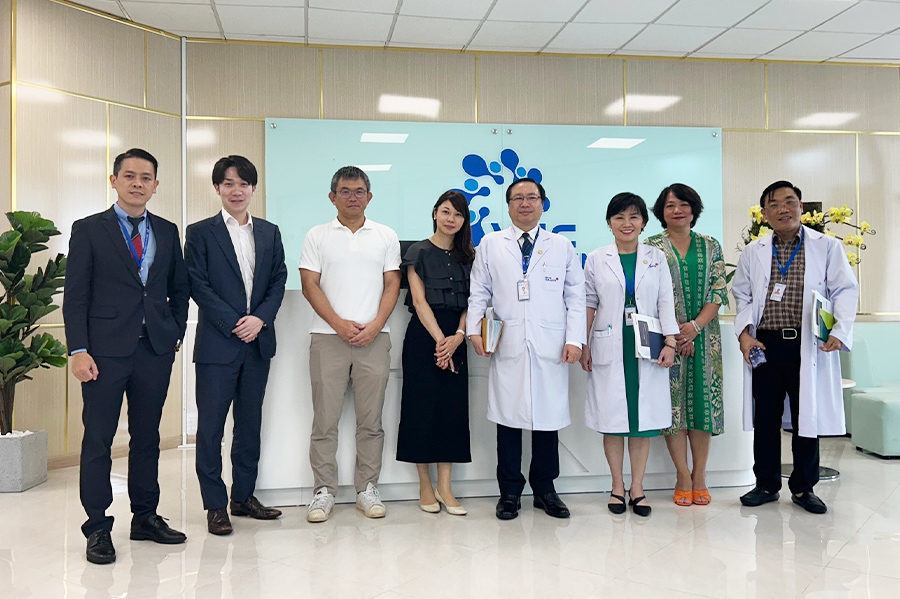
This initiative is still in its early stages. In January 2025, we established the joint venture Noage International (*3). We are currently focusing on marketing and sales in Asian markets, particularly Vietnam and Indonesia. I serve as Executive Vice President of the company and also oversee overseas sales as Head of the International Division.
*3 Noage International
A joint venture established by Mitsubishi Corporation and Advanced Medical Care Inc., a group company of Resorttrust, Inc. The company aims to bring the value of Japanese medical and wellness services to a global audience, promoting healthy longevity at every stage of life.
Starting a new business must come with many hardships.
Yes. Initially, online meetings with overseas partners didn't progress well. The discussions involved complex national regulations and were conducted through interpreters, so questions and answers often failed to align.
Things improved once I began visiting those countries in person. Our seriousness may have come across more clearly, but more importantly, we were able to get to know one another through casual conversation. Being able to read reactions and facial expressions helped me understand what the sticking points were and gradually untangle complex negotiations. Even in an era where digital tools are everywhere, this experience reminded me of the vital importance of face-to-face communication.
What do you find most interesting or rewarding about your work now?
I have a strong desire to share Japan’s excellent products and services with people overseas. Having studied abroad and lived in New York, I have come to appreciate the unique strengths of other regions, while also gaining a deeper awareness of the high level of quality and attention to detail found in Japanese services. Even something as ordinary as a convenience store shows meticulous consideration for the customer.
Looking ahead, I believe healthcare will become a major strength for Japan, alongside food and culture. I see tremendous potential in medical tourism, and working in this field excites me every day.
My career has been built on the constant support of those around me. Moving forward, I hope to become a source of support for the younger generation and for my colleagues, striving to be the kind of professional who leaves people thinking, "I'm glad I had the chance to work with you."