Independent Directors Roundtable
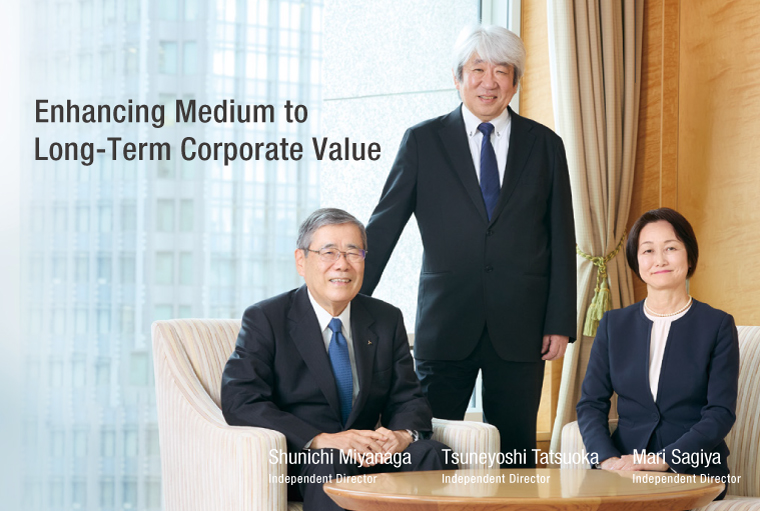
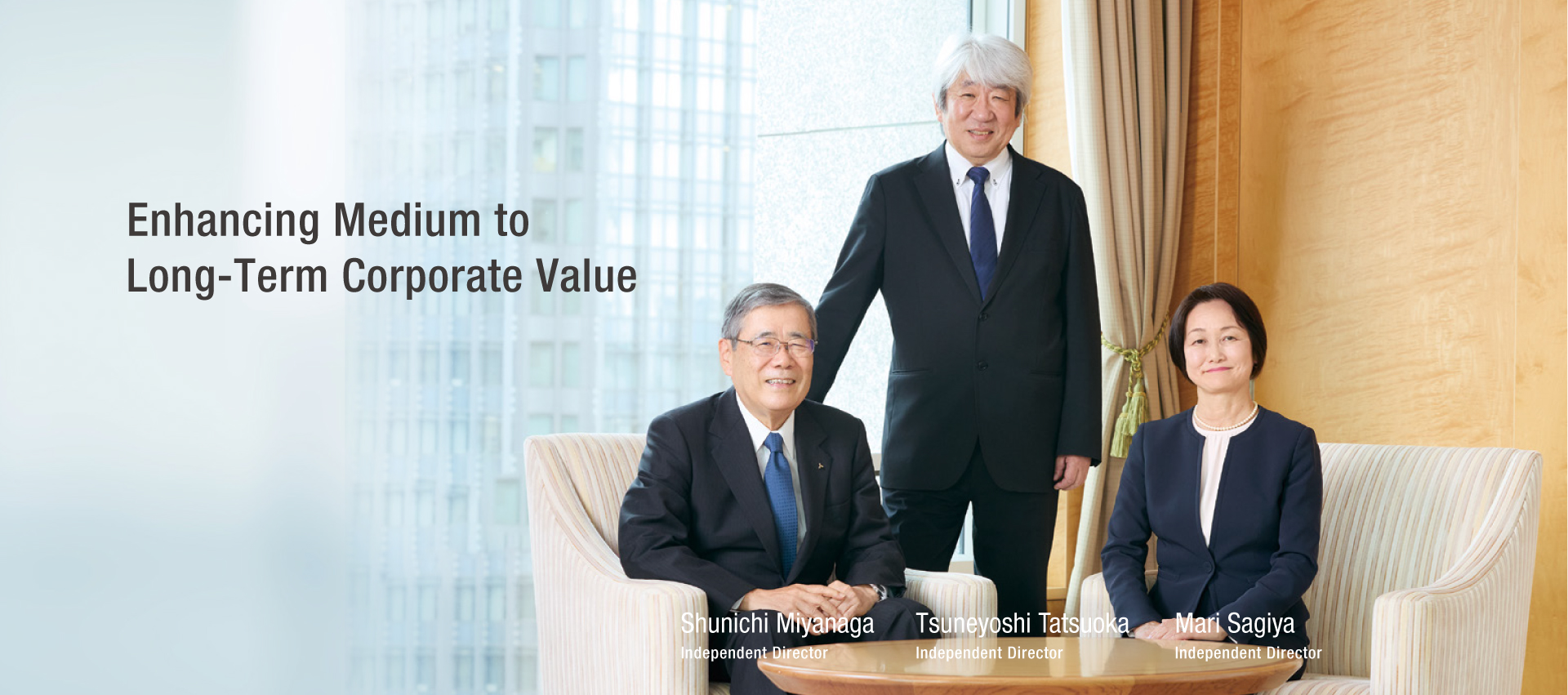
We spoke with MC’s independent directors, who have played an active role in strengthening the effectiveness of the Company’s corporate governance, about their involvement in shaping and overseeing management strategy and major investment decisions, as well as their expectations for MC going forward.
First, looking back on the formulation of Corporate Strategy 2027, please share any key points you focused on during the deliberations.
Tatsuoka:I was initially somewhat skeptical about the practice of formulating a medium-term corporate strategy and managing the Company against it. Given the significant changes taking place in the external environment, I questioned whether there was value in discussing, on a yearly basis, what had or had not been achieved against pre-set plans.
What is important is first setting core objectives and then executing our strategy in a flexible and agile manner while adapting to changes in both the external environment and internal conditions. I view the decision to present our plans as a corporate strategy, rather than a medium-term corporate strategy, as more than a simple change in name. It reflects this underlying approach.
Sagiya:I was appointed as a director after Midterm Corporate Strategy 2024 had already been formulated. Initially, there were many highly challenging projects, particularly in the areas of Digital Transformation (DX) and Energy Transformation (EX), and there were times when I was honestly concerned about how well our plans would progress.
Over the following three years, people on the frontlines worked through considerable trial and error. I believe that experience has been properly reflected in Corporate Strategy 2027 (CS 2027). In the DX field, MC is leveraging AI not only for proof-of-concept initiatives, but also to drive implementation across its businesses and in society more broadly.
Additionally, in the EX field, MC recognizes that the external environment surrounding decarbonization continues to evolve. Even amid these highly uncertain conditions, I am encouraged by the fact that the Company continues to make steady progress.
Now that a year and a half has passed since CS 2027 was announced, what are the key considerations you focus on when monitoring management’s initiatives and progress?
Miyanaga:The first thing we consider when monitoring progress is whether an initiative is intended to deliver near-term results or to drive growth over the medium to long-term. In the case of near-term initiatives, we assess how they contribute to medium to long-term value creation. We carefully review the rationale behind management’s decisions, including whether to conclude an initiative after achieving short-term results or whether there is potential to generate additional value from the knowledge gained.
In addition, global businesses tend to be larger in scale than domestic businesses, which means that while the upside can be substantial, so can the risks. As such, when pursuing global opportunities, we assess whether the Company has sufficient experience in the area or whether a more cautious approach is warranted.
Tatsuoka:When monitoring progress, I remain focused on whether each initiative aligns with the Company’s overall direction. As part of the Board of Directors’ annual monitoring cycle, we begin the fiscal year by reviewing overall management direction and key issues through reports from the Management Strategy Meeting,* while also reviewing each business segment’s goals and initiatives through reports from the Business Strategy Committee. Midway through the fiscal year, we engage in dialogue with business segments and corporate departments to determine whether there are gaps between the Company’s overall strategy and operational realities on the ground. I believe this comprehensive monitoring cycle is essential.
Sagiya:As Director Tatsuoka mentioned, hearing directly from people on the frontlines is essential for identifying progress and challenges that cannot be captured through numbers alone. In monitoring CS 2027 over the past year, one particularly positive development has been the increase in discussions around how projects connect across business segments and contribute to value creation across the broader value chain. These discussions have become a natural part of the decision-making process.
- *The Management Strategy Meeting meets annually to review key company-wide issues, as well as corporate strategies and policies in light of both external and internal developments, prior to the Business Strategy Committee, where each segment’s strategy is discussed.
How do you view the achievement of both growth and efficiency as outlined in CS 2027, as well as the Value Creation Framework designed to achieve this goal?
Tatsuoka:In CS 2027, the quantitative targets established to achieve both growth and efficiency are underlying operating CF and ROE.
ROE is a net-profit-based indicator and disclosing a company-wide ROE target externally helps build trust with the market. However, we should be careful not to apply the same uniform ROE target across diverse business areas. It is important to evaluate and pursue investment opportunities that are appropriate for each business area while collectively contributing to higher company-wide ROE.
Miyanaga:It is certainly true that ROE is an indicator that is easy for investors to understand. However, as Director Tatsuoka mentioned, at a company like MC, with its diverse business areas, capital allocation and approaches to risk-taking vary by business.
Therefore, rather than simply disclosing ROE results, it is important that MC clearly explains how individual businesses are structured, how they use capital, and how they generate returns from both short-term and medium to long-term perspectives.
Tatsuoka:To enhance medium to long-term corporate value, underlying operating CF is particularly important. In other words, it is essential to strengthen MC’s cash-generating capacity and reinvest that cash into future growth opportunities, creating a sustainable cycle of value creation. To support this, MC’s Value Creation Framework must be clearly communicated to people on the frontlines. We have made a point of confirming, through regular dialogue and other means, how these concepts are being understood and applied across the organization.
Miyanaga:Ensuring these concepts are understood by people on the frontlines is critically important. MC has defined its Value Creation Framework as “Enhance,” “Reshape,” and “Create.” “Enhance” does not simply mean strengthening existing businesses. Rather, it involves identifying new growth opportunities within those businesses by expanding into new geographies and addressing different market needs. “Reshape” refers to reviewing MC’s business portfolio and capital allocation in response to changes in the external environment and business maturity, then restructuring them to improve growth potential and efficiency. Finally, “Create” is not simply about launching new businesses. It is about connecting those businesses to MC’s strengths and value chains to generate sustainable, long-term value.
Sagiya:In CS 2027, I believe it has become much clearer that our approach focuses not only on developing new projects but also on identifying growth opportunities within our existing businesses.
Therefore, it is important to communicate a clear story, both internally and externally, about how MC plans to “Enhance” its existing businesses and how they will evolve as a result. For example, in the DX field, it will be easier for both internal and external stakeholders to understand the value of AI if we can demonstrate not only efficiency gains, but also how those gains translate into greater value creation.
Within the Value Creation Framework, “Enhance” may seem modest at first glance.
However, I sense a growing shared understanding throughout the Company that this is precisely where significant value can be created. I look forward to seeing “Enhance” take shape as another important driver of MC’s future growth.
FY2025 featured a large-scale investment project in the U.S. shale gas business. What kind of discussions did the Board of Directors engage in leading up to the final decision?
Tatsuoka:The U.S. shale gas project involved adding upstream gas assets to MC’s existing downstream LNG sales and trading capabilities. By connecting the entire gas value chain, the project was not simply an investment opportunity, but a strategically significant initiative aimed at enhancing the value of MC’s integrated value chain.
However, given the scale of the investment, there were numerous issues that required careful examination. These included the risks associated with entering the upstream business, our understanding of the U.S. natural gas market, the business’s sensitivity to market conditions, the operational structure of the investee company, and potential changes in U.S. government policy. The Board of Directors engaged in thorough discussions on each of these points.
Sagiya:One particularly positive aspect of this project was that information was shared with the independent directors from a very early stage. At some companies, information on highly confidential M&A transactions is not shared with independent directors until the final stages. In this case, however, key discussion points were presented from the outset, allowing us to exchange views while receiving regular updates on the project’s progress.
Particularly in the latter stages, the risks that Director Tatsuoka mentioned were categorized, and response strategies for each issue were clearly outlined. This structured approach provided a strong foundation for the final decision.
Miyanaga:I was initially cautious about this project. In general, shale gas businesses carry a high degree of uncertainty because they are significantly affected by market conditions and regulatory developments. As a result, I examined in detail the extent of MC’s understanding of the shale gas business and the degree of influence it could exercise over the investee’s management and personnel.
After reviewing these factors, along with the various risks and mitigation measures, and most importantly the potential to create value across the entire value chain, I concluded that the investment offered an attractive balance of risk and return and was well worth pursuing.
Tatsuoka:An investment project does not end when the investment decision is made. It must be continuously monitored to determine whether the underlying assumptions remain valid. Particularly for large-scale investments such as this one, it is important to assess over time how actual performance compares with the original projections.
In the formulation of the “Roadmap to a Carbon Neutral Society 2.0” released in May 2026, how do you evaluate the involvement of the independent directors as well as MC’s systems and initiatives?
Sagiya:In the discussions leading up to the formulation of Roadmap 2.0, I was encouraged by the fact that MC openly shared not only favorable information, but also the challenges and complexities involved.
Carbon neutrality initiatives are not simply about setting ambitious targets. It is equally important to carefully assess how capital is allocated, as well as the potential emissions reductions and associated risks, in order to establish goals that align with business realities. In that sense, I believe Roadmap 2.0 is meaningful because it maintains MC’s 2050 net-zero target while presenting a realistic roadmap toward 2030.
Tatsuoka:First and foremost, I believe MC has been committed to advancing carbon neutrality initiatives for many years.
Unlike industries in which the company itself is the primary source of emissions, MC operates across a wide range of business areas. As a result, MC must focus not only on reducing its own direct Scope 1 and Scope 2 emissions, but also on addressing Scope 3 emissions at its operating companies and throughout the value chain. This makes it important for MC to contribute to decarbonization across society through the businesses in which it is involved. For this reason, the Board of Directors reviewed not only the emissions targets themselves, but also whether MC’s carbon neutrality initiatives were being implemented appropriately, taking into account the characteristics of each business, scenario analyses, internal carbon pricing, and the risk of stranded assets.
Miyanaga:Addressing climate change is an area in which organizations around the world continue to navigate through trial and error. Over the long term, current assumptions may change significantly as scientific advances, technological innovation, and disruptive inventions reshape the landscape. Under these circumstances, when MC participates in individual businesses, it is important that the Company can clearly explain how those initiatives will contribute to meaningful progress.
A multifaceted analysis is required, taking into account not only the quantitative goal of reducing emissions, but also factors such as efficiency and improvements across the value chain. Independent Directors play an important role in continuously monitoring both the quality of this analysis and the validity of the explanations provided to external stakeholders.
Communication with external stakeholders has increased around large-scale investments and the release of Roadmap 2.0. As Independent Directors, how do you believe MC is viewed by shareholders and investors?
Miyanaga:We often heard from overseas investors that Japan’s sogo shosha were difficult to understand. Recently, however, the unique characteristics of each sogo shosha have become much better understood, and I believe MC is increasingly viewed as a company that offers stability while pursuing steady growth.
I believe that MC’s efforts to create value in areas aligned with evolving needs and priorities, together with its commitment to clearly communicating those efforts externally, contributed to a better understanding of the Company among investors and other stakeholders.
Tatsuoka:I believe the establishment of the CSEO structure, along with MC’s more proactive approach to communicating more clearly what it aims to achieve and how it intends to create value, has been well received by external stakeholders. However, market evaluation is influenced by many factors, and because effective communication is an ongoing effort, I believe continuous innovation and regular reassessment remain essential.
Sagiya:My understanding is that many of MC’s investors seek long-term, sustainable value. In that sense, MC’s track record and ability to consistently generate sustainable value are important evaluation factors, and the Company should continue to communicate its performance in these areas. In addition, initiatives related to human capital and talent development are increasingly important considerations for investors. However, as Director Tatsuoka noted, market evaluations are not determined by the Company alone. It is important that we humbly accept external feedback while continuously considering what can be improved and how we communicate our process to stakeholders.
Tatsuoka:As mentioned in relation to CS 2027, I believe there is room to more clearly explain how individual initiatives connect to MC’s broader value creation story. Using the U.S. shale gas business as an example, the Company needs not only to explain the project itself, but also to demonstrate how the cash it generates will be deployed into future growth investments. Even investments made with a clear strategic purpose can sometimes be perceived externally as standalone projects. As such, it is important to provide a more integrated narrative that connects strategic objectives with individual investments.
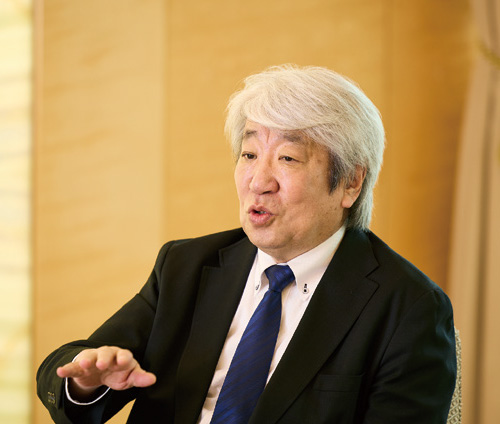
Miyanaga:MC does not have a clearly defined set of benchmark companies. As a result, the Company should consider how it positions its corporate value and growth potential from a broader perspective, rather than limiting comparisons to other sogo shosha companies. I believe we should continue exploring questions such as which companies MC should be compared with and what level of market capitalization would appropriately reflect its value.
Lastly, based on your many years of experience serving as Independent Directors, what are MC’s strengths that you have observed internally, and what areas should it pursue to continue growing in the future?
Miyanaga:MC’s strengths include its ability to adapt to changes in society, the economy, and the markets, as well as its willingness to continuously challenge itself while avoiding unnecessary risk. From junior employees to management, individuals think and act independently based on their own experiences and career paths. I believe that continuing to foster an environment in which talented individuals inspire and elevate one another will contribute to MC’s continued success.
Tatsuoka:Quite simply, I believe MC’s strength lies in the caliber of its people and its capacity for self-transformation. While maintaining a high degree of risk awareness and a robust system of checks and balances, MC has demonstrated the ability to internalize external feedback and changes in the business environment and translate them into business model transformation. By further leveraging the unique perspectives and ideas of its people, I believe MC can continue to evolve into an organization with a strong foundation that also gives individuals the latitude to demonstrate their own strengths and creativity.
Sagiya:One of the things I find most noteworthy about MC is its culture, where learning and embracing new ideas comes naturally to employees at every level, from management to junior staff. MC takes a proactive approach to emerging fields such as AI and has the ability to commit resources decisively and execute effectively. To achieve even greater growth, I believe MC’s people must continue to build diverse, cross-disciplinary experience and develop ideas that create value chains extending beyond the boundaries of individual industries and fields.