Feature Article Mitsubishi Corporation’s LNG Business – Supporting a Stable Energy Supply
-
Countries around the world face the shared challenge of balancing energy security, affordability, and decarbonization. This challenge is becoming increasingly complex as electricity demand grows with the global economy and the expansion of AI and data centers, alongside the need to address geopolitical risks and climate change.
-
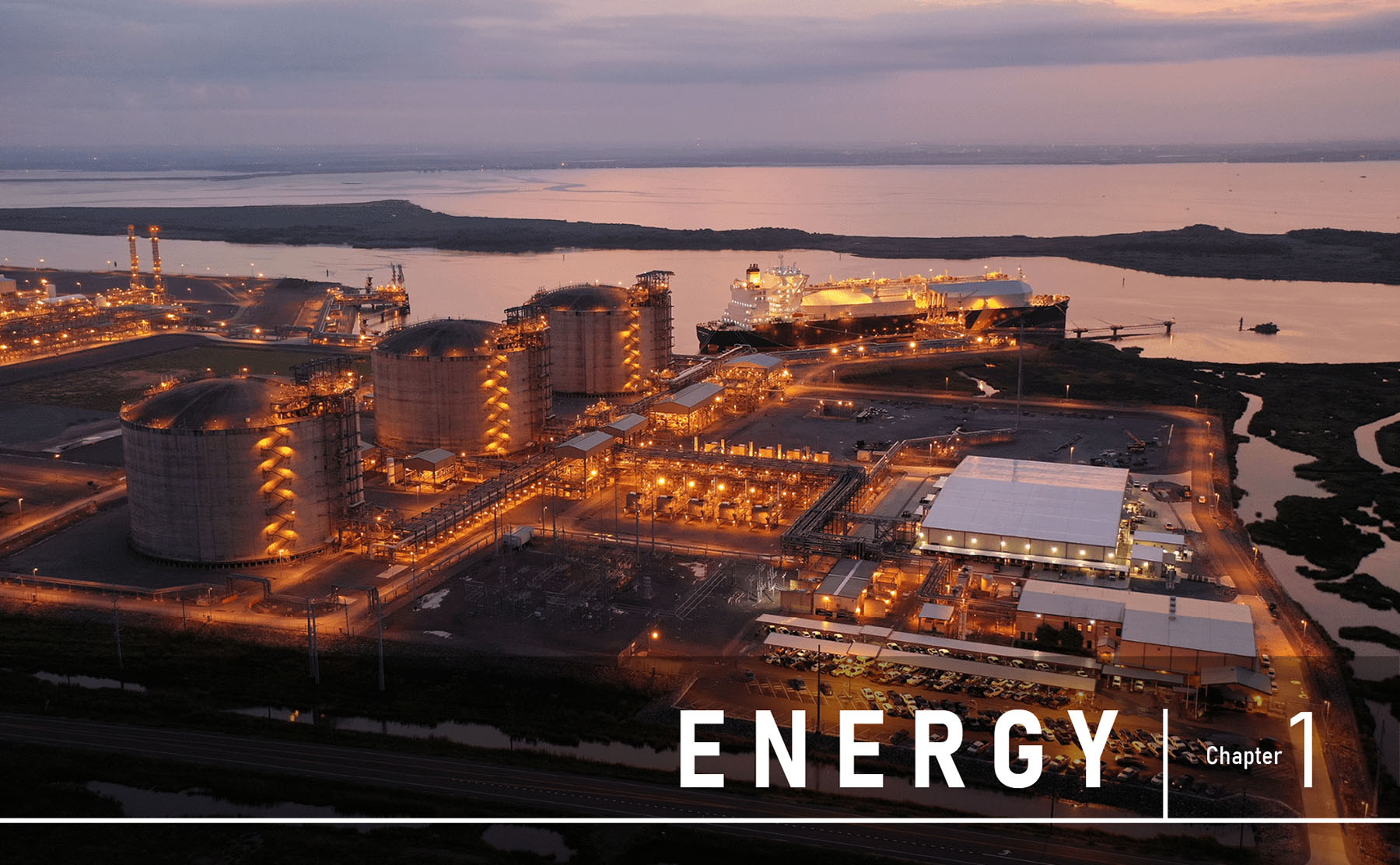
Natural gas emits less carbon dioxide than coal and oil. Converting it into LNG (liquefied natural gas) enables it to be transported by sea and sourced from diverse regions, helping countries secure a stable supply of energy.
-
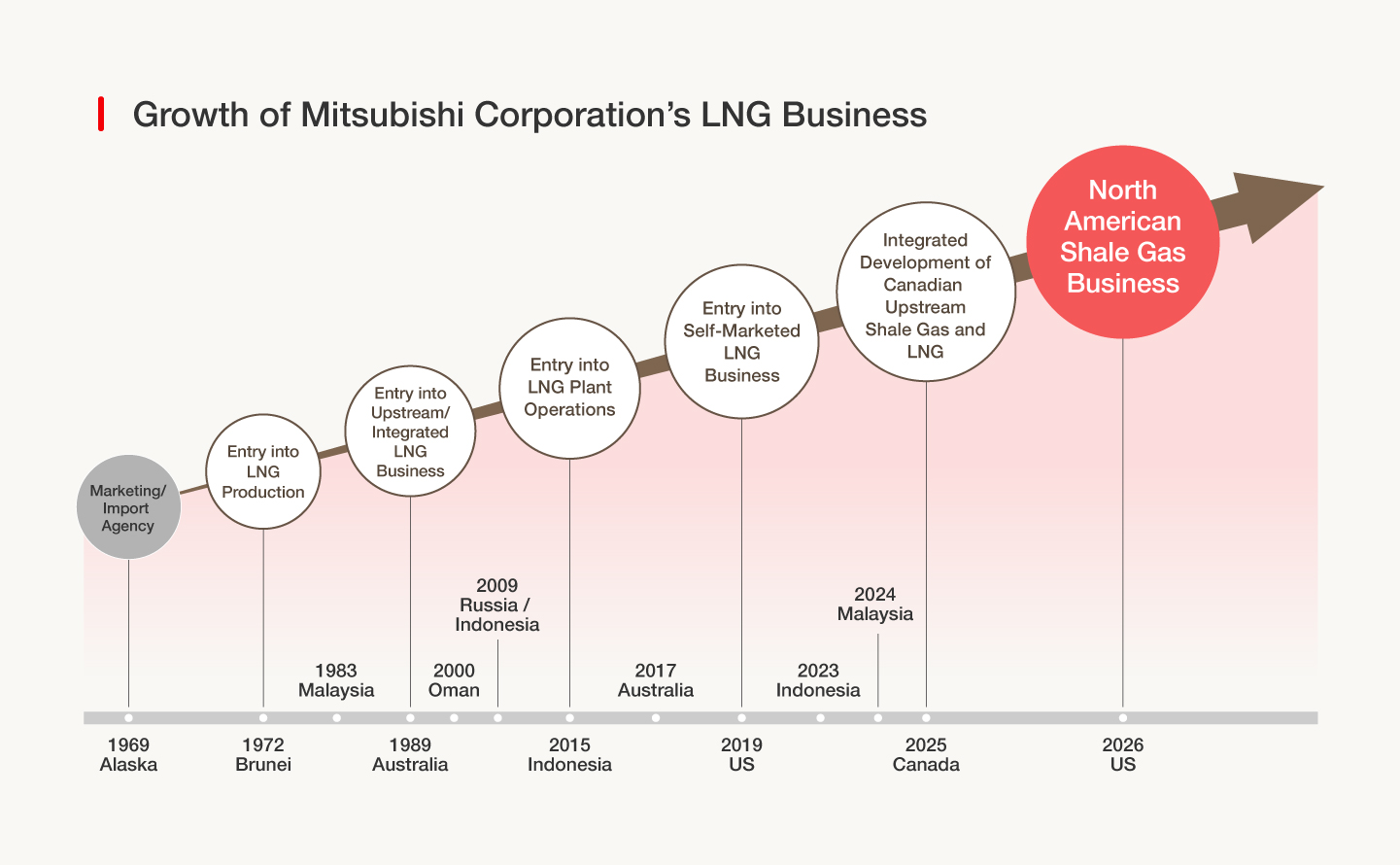
Since its involvement in Japan’s first LNG imports in 1969, Mitsubishi Corporation has developed a natural gas value chain encompassing upstream development, liquefaction, transportation, and sales. Over the past five decades, the company has expanded its business across Southeast Asia, Australia, and North America, contributing to the stable supply of LNG to Japan and markets around the world.
Energy underpins economic activity and people’s lives in Japan and around the world. The energy landscape has changed dramatically over the years, from Japan’s “energy revolution,” which shifted the country’s primary energy source from coal to oil, through the oil shocks and, more recently, the transition toward a low-carbon society. Today, the global energy landscape is more complex than ever, due to factors including heightened geopolitical risks, such as the Russia-Ukraine war and escalating tensions in the Middle East; rising electricity demand driven by population growth, economic development, and the spread of AI; and the impact of natural disasters on supply chains.
In response to these challenges, Mitsubishi Corporation is further strengthening its presence as a “comprehensive energy player,” with operations ranging from its longstanding resource development activities to power generation and related businesses. It is responding flexibly to evolving customer needs and changes in the business environment, both in Japan and around the world. At the same time, it is developing a diverse range of businesses to balance decarbonization efforts with the need to maintain a stable energy supply.
One of its core businesses is LNG, which is becoming increasingly important both in Japan and around the world. What has enabled Mitsubishi Corporation to remain a leading player in the LNG industry for more than 50 years, dating back to its involvement in Japan’s first LNG imports in 1969. This three-part series explores that question by examining recent developments in the global energy landscape, a project now underway in Canada, and an interview with a key figure working on the project’s front lines.
What Is LNG?
LNG stands for liquefied natural gas. Natural gas is cooled to −162°C, reducing its volume to 1/600 of its original size. This makes it possible to transport large quantities by ship from natural gas production regions to distant markets.
Balancing Decarbonization and Energy Security amid Economic Growth, Geopolitical Risks, and Growing AI Demand
Since the start of the 21st century, global energy demand has continued to grow, driven by population growth and economic development, particularly in Asia. Energy consumption has climbed as the development of power and industrial infrastructure continues, especially in emerging economies. The international community now faces the shared challenge of securing a stable and affordable energy supply to support global economic growth.
At the same time, it has become increasingly important to address climate change, and efforts to reduce greenhouse gas emissions in the energy sector have accelerated. Countries around the world have expanded the use of renewable energy and pursued greater energy efficiency. In Japan, too, the introduction of the feed-in tariff (FIT) system spurred the adoption of large-scale solar power facilities, including mega-solar projects, as well as residential solar power systems.
Furthermore, in 2020, the Japanese government declared its goal of achieving carbon neutrality by 2050. Amid such developments, decarbonization has become an important consideration in both energy policy and corporate management.
However, the global energy landscape changed dramatically after the start of the Russia-Ukraine war in 2022. Amid heightened geopolitical risks, the energy landscape has become increasingly diverse and complex. With supplies of Russian natural gas falling sharply, European countries faced the urgent need to secure alternative energy sources. Global demand for LNG expanded, tightening the supply-demand balance and at times sending spot prices to unprecedented levels.
Meanwhile, conditions in the Middle East have continued to worsen amid the deteriorating situation in Israel and Palestine and heightened tensions between the United States and Iran. Concerns over maritime transport routes, including the Strait of Hormuz, have become a source of volatility in crude oil and LNG markets.
More recently, the widespread adoption of generative AI has fueled growing demand for energy-intensive data centers, contributing to a sharp increase in electricity demand. In addition, further electrification is expected across industrial and transportation sectors, as reflected in trends such as the growing use of electric vehicles and the shift from blast furnaces to electric arc furnaces in steelmaking.
In this way, energy-related challenges have become increasingly diverse. It is no longer simply a matter of meeting rising demand driven by economic growth and other factors. Rather, these challenges now include advancing decarbonization efforts, preparing for geopolitical risks, and responding to the unprecedented increase in electricity demand associated with generative AI. As a result, we now face an energy landscape that is more complex than ever – one that requires countries to address multiple challenges simultaneously. Among these, energy security – ensuring a stable energy supply – has once again taken on greater importance. How can we reliably meet growing energy demand while reducing carbon emissions? This has become a critical challenge shared by countries around the world.
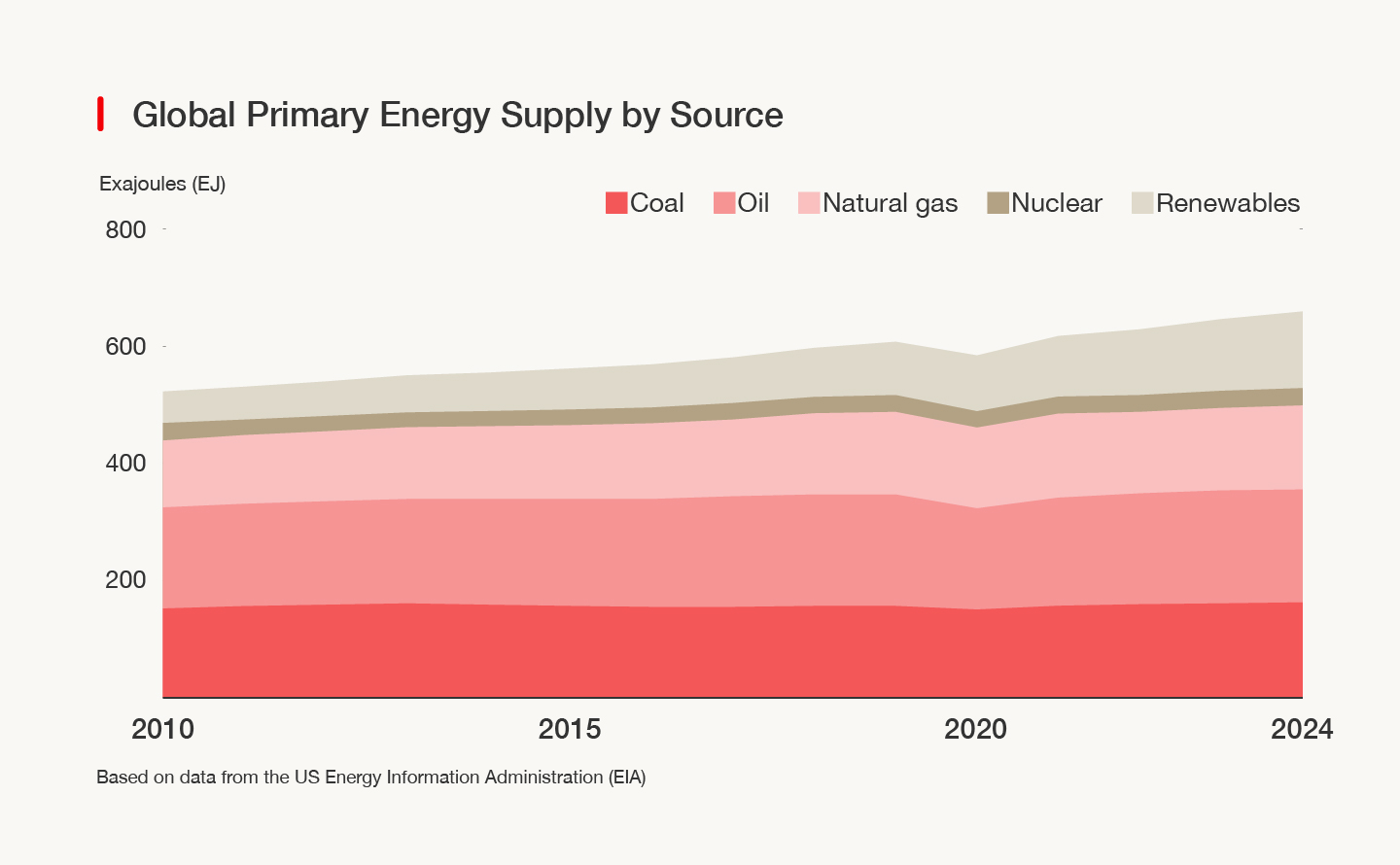
Renewable energy is one potential solution. However, many regions still lack the battery storage and transmission infrastructure needed to compensate for fluctuations in renewable power generation, making it difficult for renewables alone to reliably meet demand. Even today, fossil fuels account for around 80% of the world’s primary energy supply, which includes crude oil, coal, and other energy sources obtained directly from nature.
Japan’s Energy Policy – Stressing Safety, Energy Security, Economic Efficiency, and the Environment
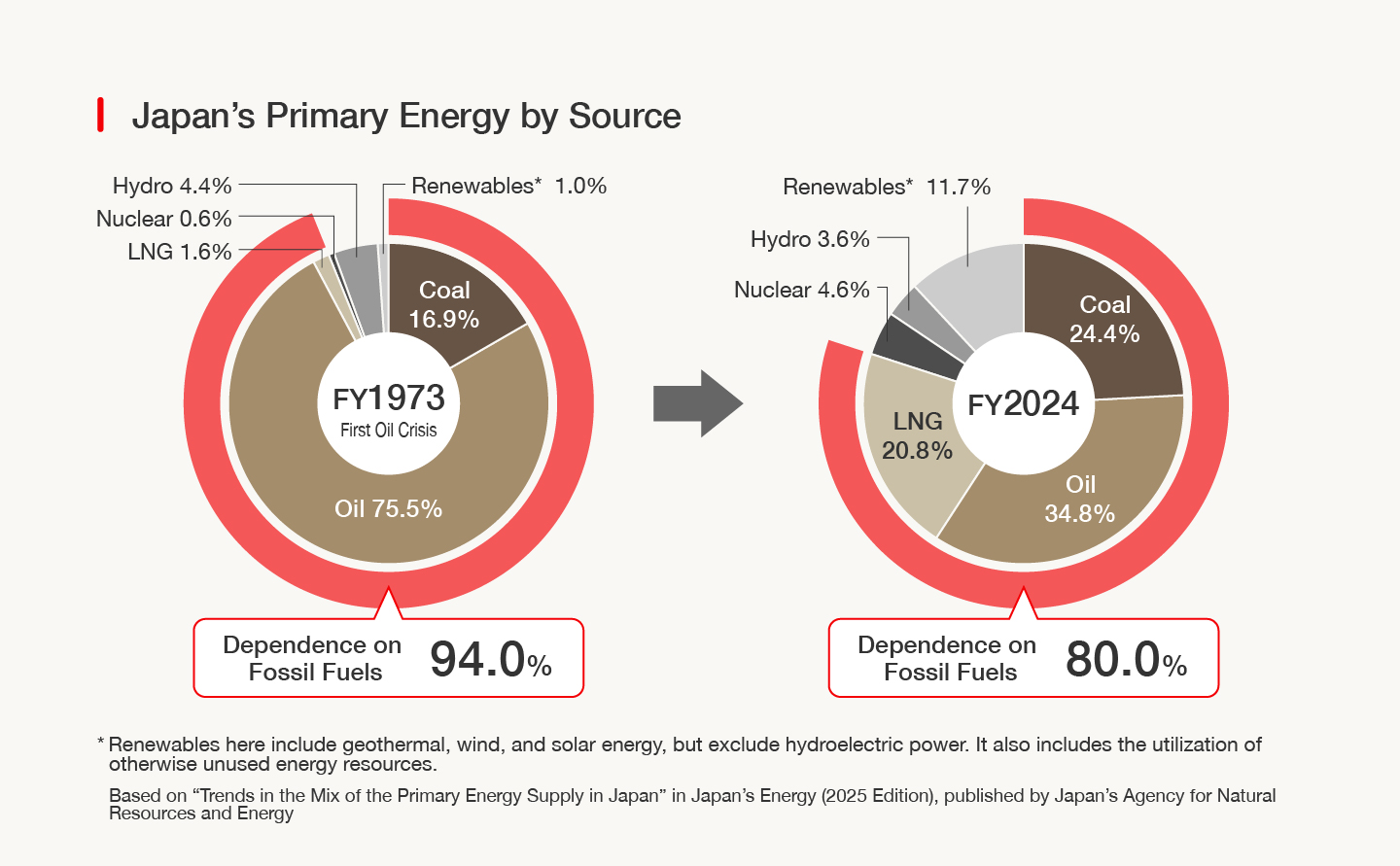
With its limited domestic energy resources, Japan relied on the Middle East for more than 90% of its crude oil imports before the deteriorating situation in the region spurred efforts to secure alternative supplies. The Russia-Ukraine war and heightened US-Iran tensions have once again demonstrated the direct impact that geopolitical events can have on people’s lives, such as by driving up prices for energy, including gasoline.
With relatively little flat land and few areas of shallow water suitable for offshore wind power, Japan has a limited number of locations where large-scale renewable energy projects can be developed. Furthermore, because renewable power generation fluctuates depending on weather conditions, there is a need for battery storage to compensate for this intermittency, along with expanded transmission infrastructure to support it. Although renewable energy use continues to grow, Japan, like the rest of the world, still relies on fossil fuels for around 80% of its primary energy supply.
Given these realities, the Japanese government announced its 7th Strategic Energy Plan in 2025. In addition to establishing “Safety” as a fundamental prerequisite, the plan prioritizes “Energy security” and calls for improving “Economic efficiency” while pursuing “Environmental sustainability.” This approach, known as the “S+3E” principle, forms a cornerstone of Japan’s energy policy.
For Japan, with its low energy self-sufficiency rate, securing a stable energy supply while advancing decarbonization efforts requires a balanced energy mix that combines renewable energy with other energy sources, including fossil fuels and nuclear power. Such a mix is essential to sustaining people’s daily lives and the economy.
Lower CO2 Emissions and Diverse Production Regions – Natural Gas Takes on a Growing Role
As the energy landscape continues to evolve, natural gas is becoming increasingly important. In Japan, it is widely used as a fuel for thermal power generation and as a feedstock for city gas, and the Strategic Energy Plan identifies it as a key energy source for the future.
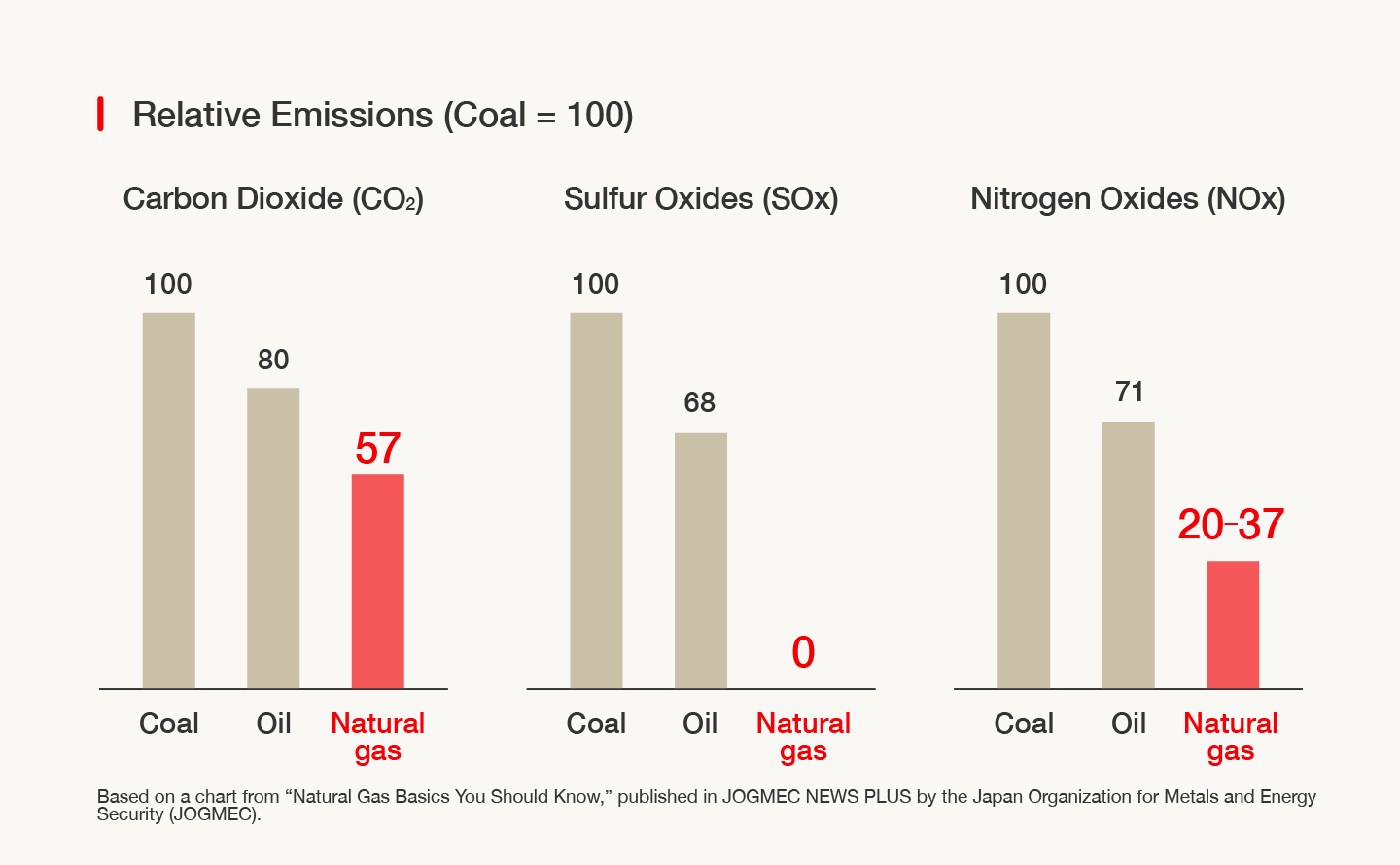
This is because natural gas produces less carbon dioxide (CO2) than coal and oil, making it well suited to supporting both lower carbon emissions and energy security during the energy transition. Methane, the main component of natural gas, contains a higher proportion of hydrogen relative to carbon, allowing it to produce more energy while generating lower CO2 emissions than other fossil fuels. Natural gas also contains very few impurities and therefore emits lower levels of air pollutants such as sulfur oxides (SOx) and nitrogen oxides (NOx).
Natural gas also offers advantages from an energy security perspective. Japan depends on imports for much of its energy resources, with a high proportion of its crude oil coming from the Middle East. This reflects not only the availability and price competitiveness of Middle Eastern crude oil, but also the fact that Japanese refineries have long been designed and operated primarily to process crude oil from the region. As a result, concerns over supply have intensified whenever tensions rise in the Middle East, posing a threat to both industrial activity and everyday life.
In response to these challenges, Japan began importing LNG in 1969, becoming one of the world’s earliest adopters of the fuel. Japan expanded its use of LNG particularly following the oil crises of the 1970s, as it sought to avoid excessive dependence on any single energy source or supply region.
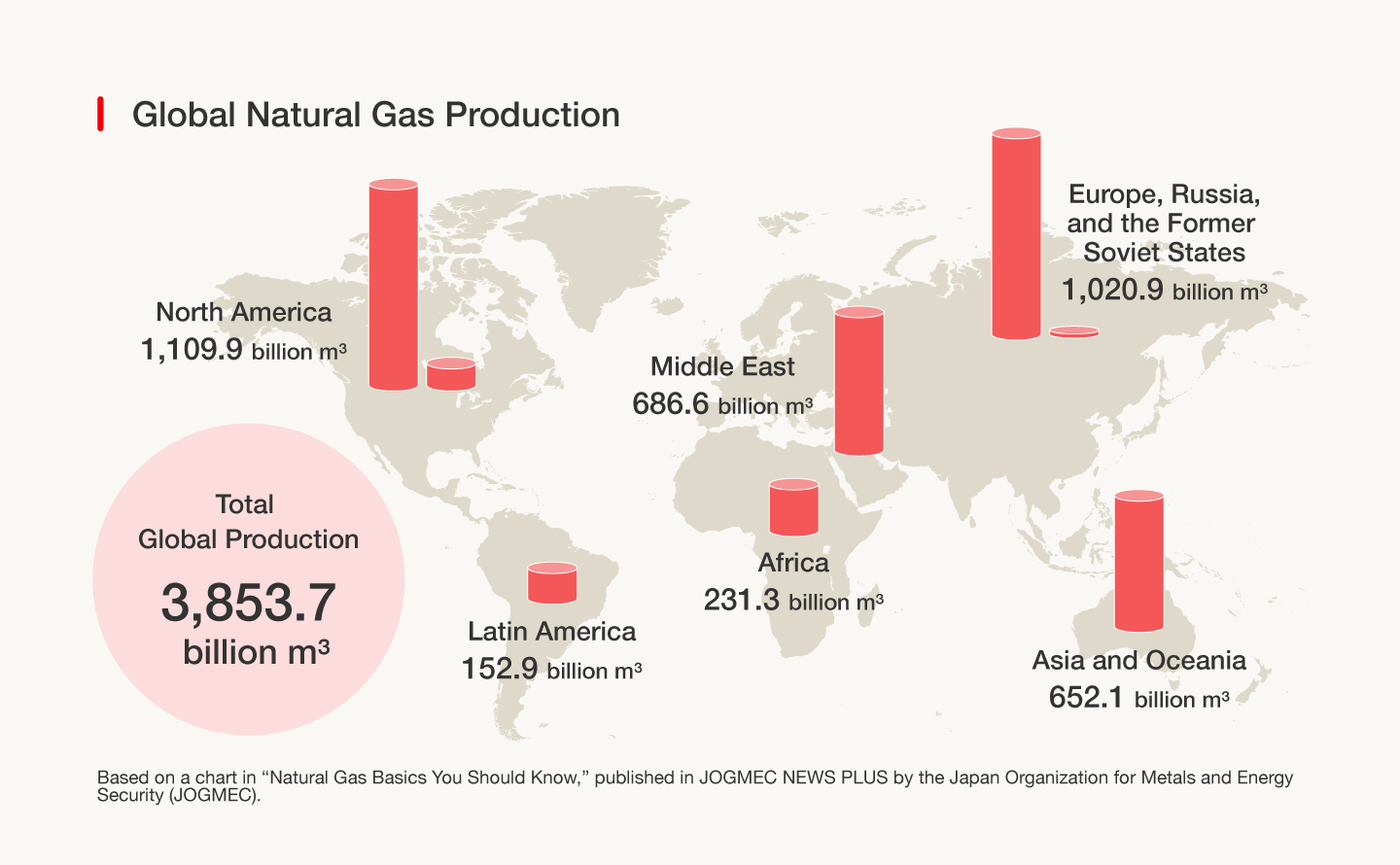
Natural gas is produced in regions around the world, including North America, the Middle East, Russia, and the Asia-Pacific. Japan currently procures LNG from multiple regions, including Australia, Asia, North America, and the Middle East. In recent years, US LNG has gained prominence following the shale revolution. Through greater diversification of Japan’s energy sources and supply regions, natural gas has come to play an important role in supporting energy security.
Reducing Natural Gas to 1/600 of Its Original Volume and Bringing LNG Across the Pacific amid Growing Air Pollution Concerns
It would be extremely difficult to transport natural gas in its gaseous form to Japan by pipeline across oceans from producing regions such as North America, Southeast Asia, Australia, and the Middle East, particularly in terms of the infrastructure required. The development of liquefaction and LNG transportation technologies overcame this challenge, making it possible to transport natural gas by sea as LNG on specialized carriers.
Japan first imported LNG from Alaska in 1969 during a period of rapid economic growth when demand for electricity and gas was rising and air pollution from burning coal and oil had become a major social issue. Mitsubishi Corporation played an important behind-the-scenes role in supporting the project, conducting feasibility studies and providing import agency services.
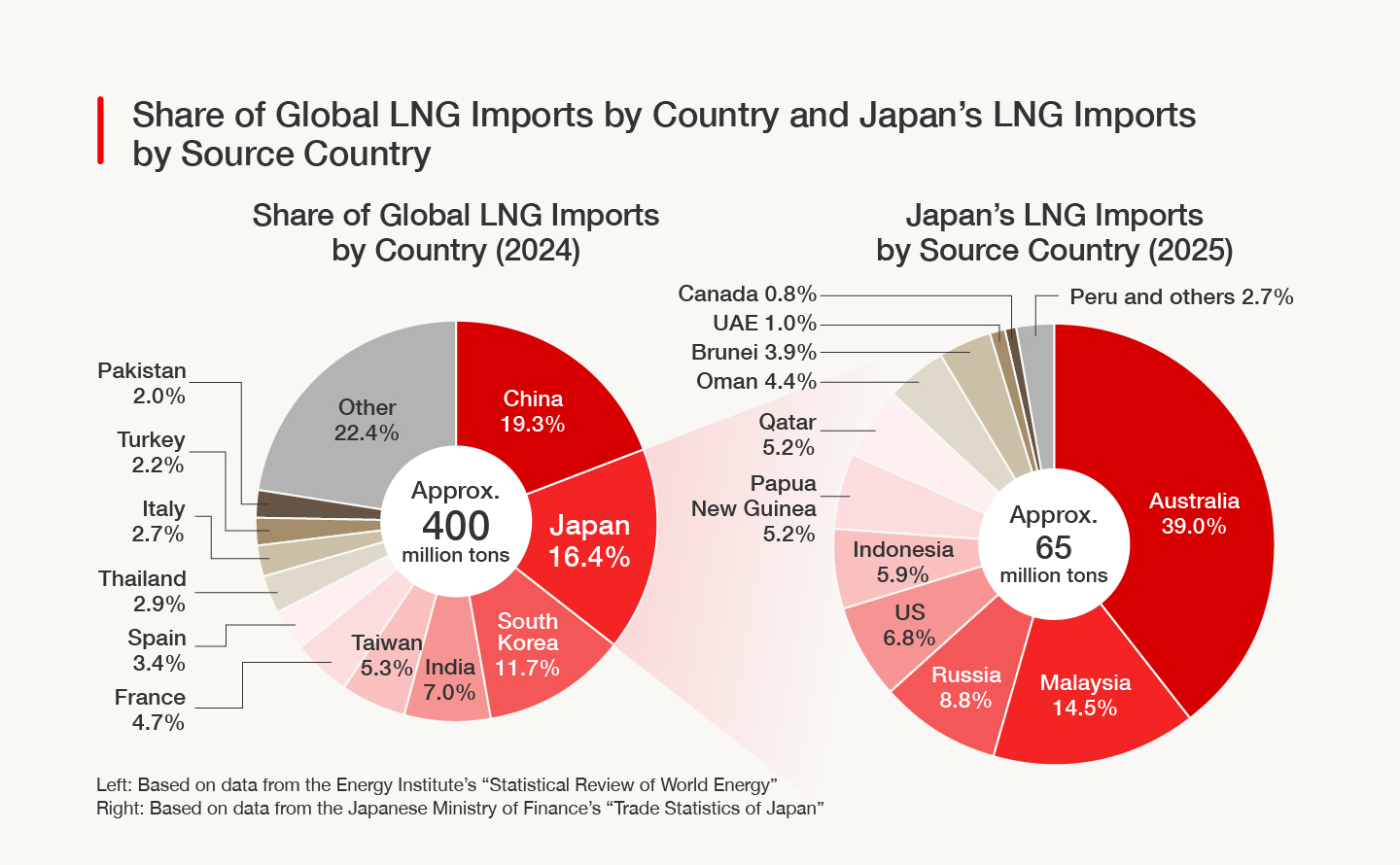
This milestone laid the foundation for Japan’s current position in the LNG industry. As of 2023, Japan accounted for approximately 16% of global LNG trade, importing around 64 million tons out of a total of approximately 400 million tons. In contrast to its heavy reliance on the Middle East for crude oil, Japan has diversified its LNG supply sources to enhance energy security. In 2025, its major LNG suppliers included Australia, Malaysia, Russia, the United States, and Indonesia, leaving Japan far less dependent on the Middle East for LNG than for crude oil.
Looking ahead, population growth and economic development are expected to continue, particularly in Asia, while the adoption of generative AI, the expansion of data centers, and electrification continue to gain momentum. As a result, dependence on fossil fuels is likely to persist, and demand for natural gas, with its relatively low CO2 emissions, is projected to keep growing.
In Japan, the outlook for LNG demand varies depending on factors such as improvements in energy efficiency, the expansion of renewable energy, and the pace at which nuclear power plants are restarted. Nevertheless, LNG is widely expected to continue playing an important role as a reliable fuel for power generation and as a feedstock for city gas.
In light of these circumstances, Japan’s Strategic Energy Plan cites the high efficiency of natural gas as a heat source and its relatively low geopolitical risk as key advantages. The plan also positions natural gas as an important energy source in the transition to carbon neutrality, noting the central role of gas-fired power generation in balancing electricity supply and demand amid fluctuations in output from renewables, as well as expectations for the expanded use of natural gas as a feedstock for hydrogen production and other applications.
Leveraging Value Chain Strengths to Pursue a Stable Supply of Low-Risk Canadian LNG
Since 1969, Mitsubishi Corporation has contributed to a stable supply of LNG globally while expanding its LNG business into Southeast Asia, Australia, and North America. This expansion has been underpinned by the trust Mitsubishi Corporation has built around the world, thanks to the strength of its LNG value chain, from natural gas development and production through liquefaction, transportation, and sales, and its long-term transactions with customers.
However, although natural gas is sourced from diverse regions, production is declining in some parts of Asia and Oceania that have long supplied Japan. Without further investment, there are concerns that supply capacity in these regions could decline in the future.
In addition, since the start of the Russia-Ukraine war, it has become extremely difficult for foreign companies to pursue new projects in Russia. Meanwhile, tensions between the United States and Iran and broader instability in the Middle East have heightened geopolitical risks surrounding the Strait of Hormuz. Therefore, securing reliable sources of natural gas remains an important challenge.
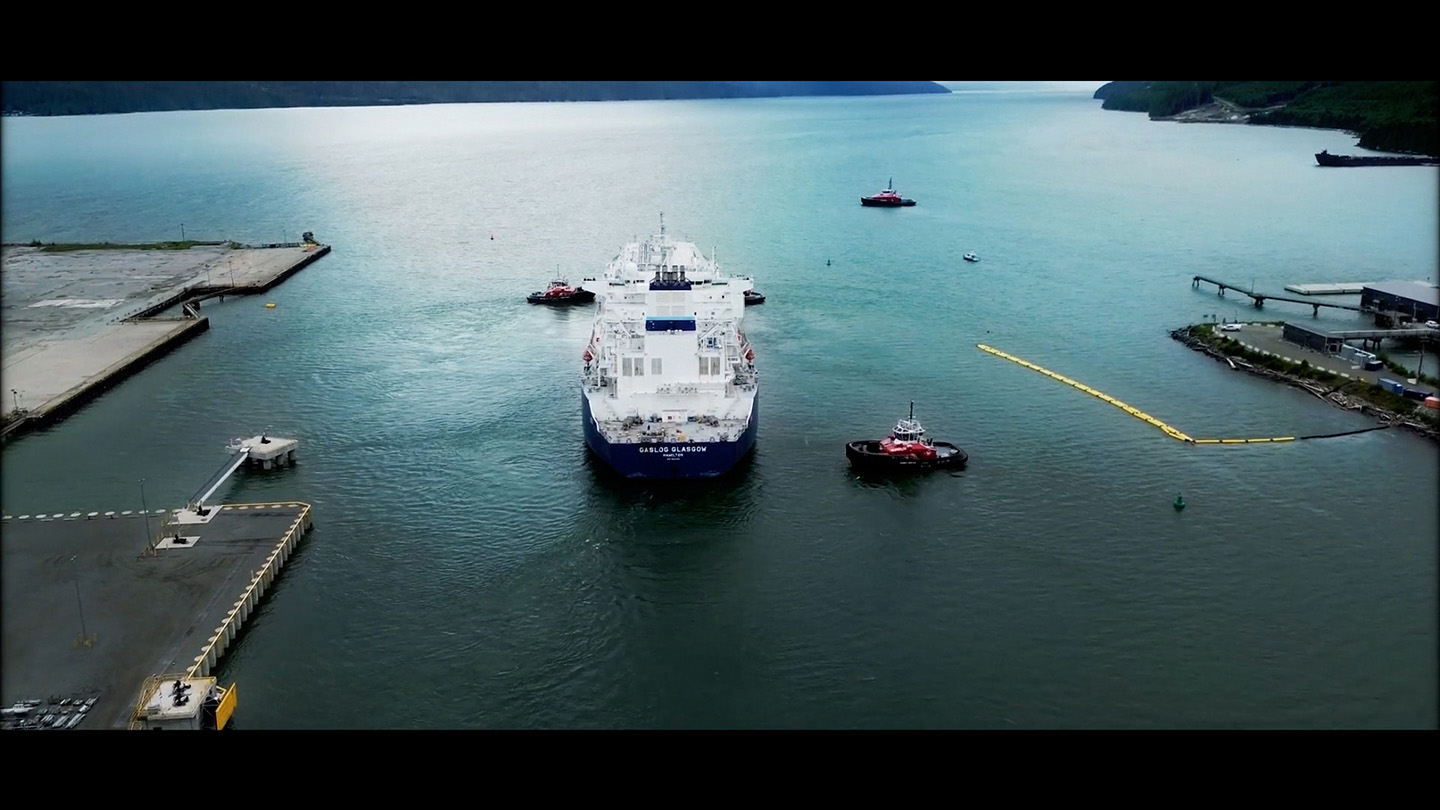
Given these supply challenges, North America is emerging as a promising source of stable LNG supply, with natural gas production and LNG exports both increasing following the shale revolution. In recent years, Mitsubishi Corporation has also been strengthening its presence in the region. After starting with projects in the US, it went on to build a value chain in Canada in which natural gas is produced inland and transported to the Pacific coast, where it is liquefied and exported to Japan and other countries.
Unlike LNG produced on the US Gulf Coast, LNG from Canada’s west coast does not need to transit the Panama Canal, nor does it need to pass through the Strait of Hormuz, as LNG from the Middle East does. The proximity of Canada’s west coast to Japan and other Asian markets offers advantages in both shipping times and reduced exposure to chokepoint risks*, making the region a promising source of stable LNG supply.
*Chokepoint: A strategic point along a maritime transport route where vessel traffic is concentrated through a narrow strait or canal. Major examples include the Strait of Hormuz, the Strait of Malacca, the Suez Canal, and the Panama Canal. Conflicts, accidents, or restrictions on passage at these locations can have a significant impact on energy shipments.In the next installment, we take a closer look at the LNG project being developed by Mitsubishi Corporation in Canada.
(Reporting/Production: YOMIURI BRAND STUDIO)