A Local Lens on Our Wide World
Spirit of Hospitality in a Cup of Arabic Coffee
3 min read

Mitsubishi Corporation has developed a global network to drive its next phase of growth by continuously improving its responsiveness to change and promoting collaboration across the organization, supported by the efficient and effective allocation of roles among the Head Office, MC offices, subsidiaries, and group companies. “A Local Lens on Our Wide World” taps into this far-reaching network, with employees at offices worldwide sharing insights into various aspects of local life.

During the more than five years I spent in Israel from 2019 to 2023, I discovered countless things to love about the country. There was the wonderfully diverse cuisine, including falafel (fried chickpea balls), moussaka (layers of eggplant and minced meat baked together), schnitzel (thin breaded cutlets), and much more. Then there were the long stretches of white sandy beaches along the coast, as if gathered there to watch the sun set over the Mediterranean. Of all that the country has to offer, however, the one thing I would most like to share with you is Israeli wine.

I have always been firmly in the beer drinkers’ camp and, honestly, know very little about wine. What little I do know, I’ve picked up from my wife, who has been a sommelier for 25 years. Even though I wasn’t much of a wine enthusiast myself, I was soon struck by just how many wineries there were in Israel.
Israel is roughly the size of Japan’s island of Shikoku*, and 60% of the country – primarily in the south – is desert. That leaves just 40% of the country suitable for growing wine grapes, hardly a vast area to work with. So how many wineries do you think can be found in a country of this size?
*Shikoku accounts for approximately 5% of Japan’s total land area.
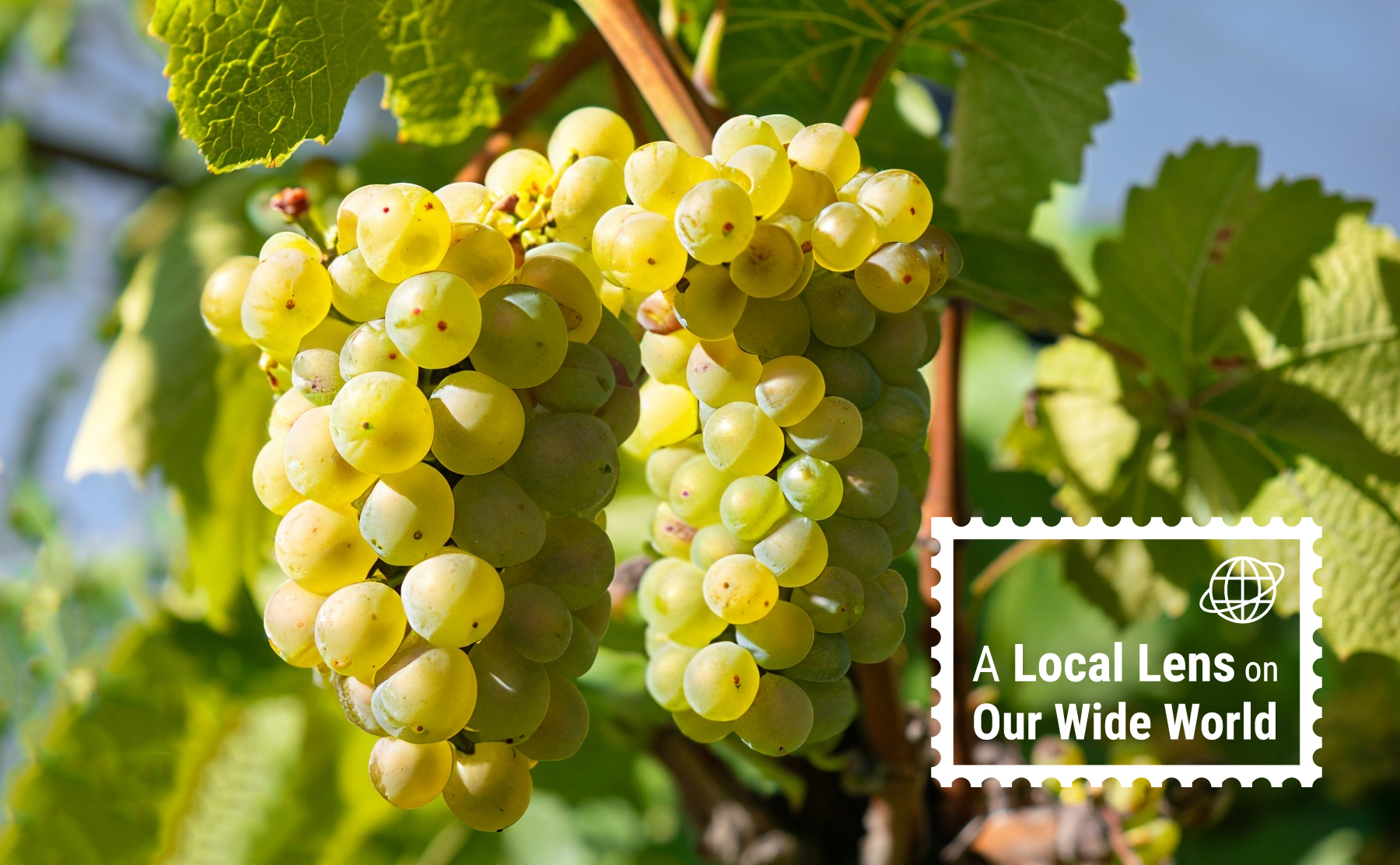
The answer is about 300. Winemaking in Israel dates back some 5,000 years, making it one of the world’s oldest wine-producing regions. By comparison, Japan has around 500 wineries – a figure that puts Israel’s impressive total into perspective. Israel is also home to many small boutique wineries where grapes are harvested one bunch at a time with scissors, relying on plenty of hands to get the job done.
Historically, it has not always been smooth sailing for Israeli wine. After the Ottoman Empire took control in 1516, restrictions were imposed on winemaking, and many indigenous grape varieties were lost. In 1882, as the Ottoman Empire entered a period of decline, a new chapter began with the involvement of Baron Edmond James de Rothschild, whose family owned Château Lafite Rothschild, one of Bordeaux’s five First Growth estates. Recognizing the potential of the region’s limestone-rich soils and climate with pronounced temperature swings, Baron Rothschild went on to establish a winery. This helped revive the country’s wine industry, and new wineries began opening one after another, particularly in the 1990s.
These days, Israeli wine is readily available in Japan as well. Israel’s richly aromatic red wines are certainly appealing. Personally, though, I have a soft spot for the reasonably priced yet delicious offerings from a winery that produces only white wines. The winery is part of the Judean Hills Quartet, a group of four artisanal wineries in the hills near Jerusalem. Its wines are a perfect match for Japan’s crisp autumn days. So why not make the most of the season by opening a bottle of Israeli white wine and spending a leisurely evening with family or friends?