Supply Chain Management: Initiatives
Initiatives
Employee Training
Many employees at MC have opportunities throughout their careers to engage in trading activities such as purchasing and sales, or to support such activities. For this reason, MC works to deepen employees’ understanding of their responsibilities as buyers by explaining MC’s corporate philosophy, including respect for human rights in the supply chain. We also integrate relevant supply chain policies into buyer training programs, including those designed for specific management levels, training for new employees, and training related to trading practices.
Engagement through seminars and workshops
Business and Human Rights Seminar
MC holds a business and human rights seminar each year for operating companies and suppliers, with one session in English and one in Japanese. In FY2025, we invited a wide range of participants from suppliers and operating companies in Japan and overseas, with a total of 185 attendees. The seminar focused on the formulation of human rights policies and the practice of remediation. Participants shared the importance of various initiatives, specific approaches, and points to keep in mind through discussions with external speakers.
We also held individual workshops for operating companies and suppliers that expressed particular interest in human rights policy development and remediation practices. In these workshops, participants exchanged views based on the unique circumstances of their business.
We continue to advance human rights and environmental due diligence by combining supply chain surveys with ongoing engagement.
Existing Suppliers
Existing Suppliers
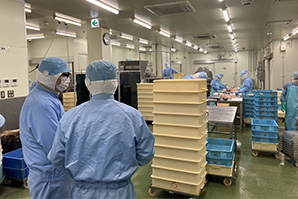
In FY2025, a representative from MC’s Sustainability Department visited Nissin Kako (NK), a confectionery chocolate manufacturer that handles processing operations outsourced by an MC subsidiary, MC Agri Alliance Ltd. MC exchanged views with NK's management and manufacturing site staff regarding sustainability challenges in the chocolate industry supply chain, deepening discussions from a broad perspective, including the formulation and dissemination of human rights policies and the operation of grievance mechanisms.
During this visit, we discussed respect for workers' rights throughout the supply chain, a key challenge facing the chocolate industry. We reaffirmed that a human rights policy should not merely be established but should be linked to the corporate philosophy and regarded by every employee as a personally relevant matter. Building on this understanding, we exchanged views on measures to disseminate the human rights policy both internally and externally, confirming that commitment from top management and the clarification of materiality in corporate activities are essential.
We also discussed the Customer Service Center, which serves as a grievance mechanism. To ensure prompt and appropriate responses when issues arise, it is essential to have an emergency reporting line that enables information to reach top management smoothly, as well as to clearly designate responsible personnel in advance.
Through this dialogue, we deepened our understanding of the priorities the company should address and feasible methods for improvement. NK, which manufactures sustainability-conscious chocolate and is expanding its consumer-facing brand beyond conventional confectionery manufacturing, proactively views the challenges of the chocolate industry not only as issues for importers and exporters involved in raw material procurement, but as its own challenges. We intend to share this approach as an example of good practice in our engagement with suppliers of other products.
MC will continue to work together with suppliers to ensure respect for human rights and the realization of a sustainable supply chain.
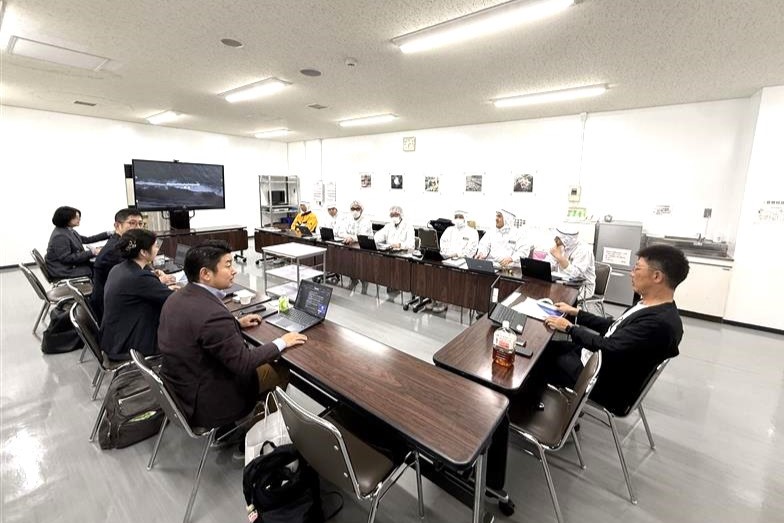
Meeting
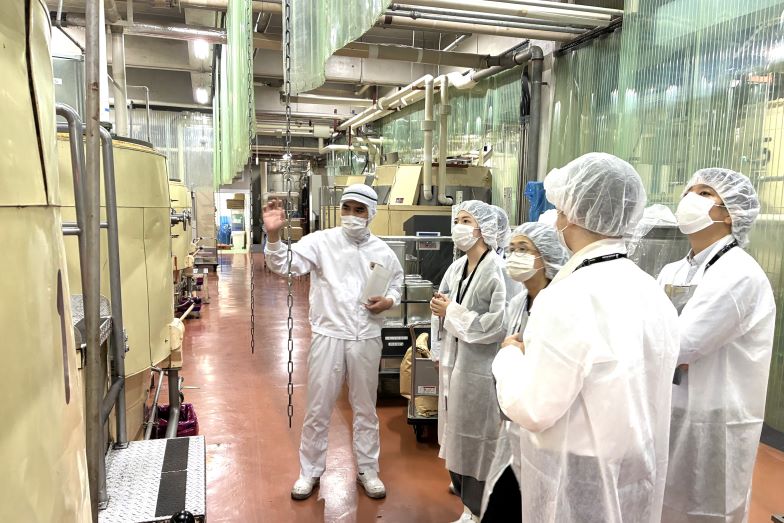
Inspection of factory facilities
External Collaboration
Participation in Supply Chain Initiatives
MC works to ensure sustainable supply chains by participating in various supply chain initiatives.
Supplier Ethical Data Exchange (Sedex)
Sedex is a global platform that provides data-driven analysis, tools, and services aimed at helping companies continually improve their ESG performance. Several MC subsidiaries use Sedex, including MC Agri Alliance Ltd., Asia Modified Starch Co., Ltd., and Nihon Shokuhin Kako Co., Ltd. These companies manage their supply chains through the Sedex platform in areas such as the purchasing and sales of raw materials for food, confectionery, beverages, and other products. Through Sedex, they collaborate with business partners on issues such as respect for human rights and quality assurance throughout the supply chain.
EcoVadis
EcoVadis is a global cloud-based software as a service (SaaS) platform that provides comprehensive corporate social responsibility (CSR) evaluation tools. MC subsidiary Mitsubishi Shoji Chemical Corporation adopted EcoVadis in 2022. The company uses the platform to collaborate with business partners on a wide range of supply chain issues, including respect for human rights and quality assurance.
Round Table on Responsible Soy Association (RTRS)
The RTRS is a global initiative that provides certification services for responsible soybean production and distribution. MC subsidiary Agrex do Brasil was the first company to obtain RTRS certification for farmland in the State of Maranhão, Brazil. In addition to obtaining RTRS certification, Agrex do Brasil continues to pursue improvements in areas such as soil protection, water management, employee engagement, and strengthening relationships with local communities.
Aquaculture Stewardship Council (ASC)
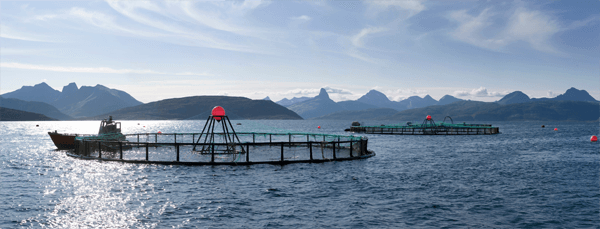
The ASC is an international nonprofit organization that operates a certification and labeling system for responsibly produced aquaculture products. In 2015, MC subsidiary Cermaq Group AS became the first salmon farming business in Canada to receive ASC certification for multiple sites.
Japan Responsible Seafood Procurement Roundtable (JRSR)
JRSR is a collaborative platform where seafood-related companies in Japan work together to address procurement challenges that cannot be solved through individual efforts alone. Through participation in JRSR, MC aims to expand its handling of sustainable seafood and ensure transparent traceability, promoting cross-company cooperation to achieve these goals.
Forest Stewardship Council® (FSC®)
The FSC promotes forest management that balances environmental protection, societal benefits, and economic sustainability. MC has obtained FSC chain-of-custody (CoC) certification for its timber processing and distribution operations. Through this certification, MC ensures that timber products it handles are produced with respect for human rights, preservation of biodiversity, and conservation of natural capital.
Cermaq Initiatives
Cermaq, an MC consolidated subsidiary, is committed to maintaining high standards related to the social and environmental impacts of its business. Cermaq has established a Supplier Code of Conduct, which reflects the principles of MC’s Policy for Sustainable Supply Chain Management, to promote responsible practices throughout the supply chain. This Code outlines the minimum standards that all Cermaq suppliers are expected to follow, and Cermaq also expects suppliers to request similar standards from their own suppliers and subcontractors. Cermaq requires all suppliers to comply with national legislation and standards related to human rights, labor rights, health and safety, anti-corruption, the environment, food quality and safety, management systems, and implementation. Regarding environmental performance, suppliers are expected to minimize adverse impacts on local communities, the environment, and natural resources while safeguarding public health and safety. These adverse impacts may include pollution, over-use of limited resources, deforestation, or the release of chemicals or other harmful materials into the ground, sea, or air. To reduce such risks, including the reduction of chemical use in fish farming, suppliers are expected to identify, monitor, and manage the environmental impacts of their operations. Cermaq also reports on the compliance of its supply chain with fundamental human rights and standards for decent working conditions.

Mitsubishi Corporation Packaging Initiatives
Mitsubishi Corporation Packaging Ltd. (MP), an MC consolidated subsidiary, has established its own Policy for Sustainable Supply Chain Management, which outlines MP’s actions to address human rights, labor rights, and environmental issues across its supply chain. This policy communicates MP’s expectations to all suppliers and subcontractors, and MP requests that they understand, accept, and implement it.
MP handles Forest Stewardship Council® (FSC®)-certified products such as cardboard and packaging paper. To assess social and environmental risks, MP confirms whether its paper manufacturing and processing suppliers hold FSC certification, which requires third-party auditing.
MP has also obtained FSC Chain of Custody (CoC) certification and follows its requirements to ensure the proper procurement, storage, and sale of FSC-certified products.
FSC Trademark License Code: FSC®‐C007960
Lawson
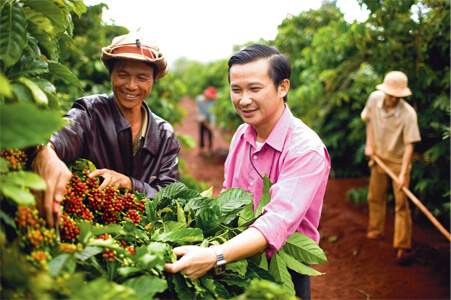
Lawson, Inc., an MC affiliate company, provides freshly brewed coffee in its convenience stores under the MACHI café brand. MACHI café coffee is made exclusively*1 from beans sourced from Rainforest Alliance*2 Certified™ farms. Lawson also undertakes efforts to promote awareness of the certification, including participating in the Rainforest Alliance Consortium, a collaboration between the Rainforest Alliance and companies that offer Rainforest Alliance Certified™ products. As a member of this Consortium, Lawson conducts promotional retweet campaigns and other awareness-raising activitites.
- *1Excludes Mocha Blend.
- *2Established in 1987, Rainforest Alliance is an international nonprofit organization focused on environmental protection. Rainforest Alliance Certification is granted only to farms that meet strict standards related to environmental conservation and improving the livelihoods of farm workers.
Olam
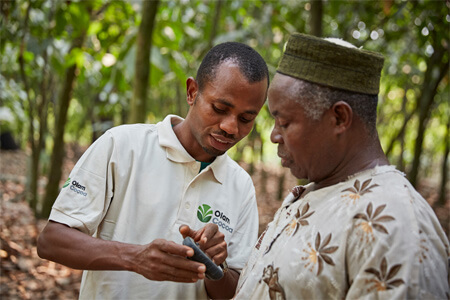
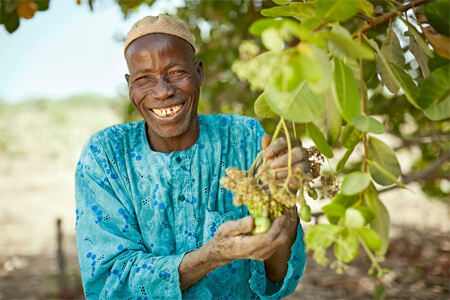
Olam Group Limited (Olam), an MC affiliate company, upholds its corporate philosophy of “Re-imagining Global Agriculture & Food Systems,” which states that business growth can only be achieved by delivering value to both the environment and society. Olam pursues three key outcomes: improving farmer livelihoods, increasing community well-being, and regeneration the living world. The company has identified ten material areas for achieving these goals and has developed a framework aligned with twelve of the seventeen Sustainable Development Goals (SDGs). In 2018, Olam launched AtSource, a digital platform that directly connects customers with suppliers to provide comprehensive sustainability solutions. The platform is、now being rolled out across smallholder farmers worldwide. Through AtSource, more than 150 customers can access supplier profiles and approximately 350 indicators, including environmental data such as CO2 emissions associated with procured raw materials, as well as social indicators such as yield data. The platform also supports the development of customer-specific sustainability projects. Olam’s sustainability initiatives through AtSource have earned significant recognition. The company received the Reuters Responsible Business Award each year from 2020 to 2023. In 2023, the Carbon Scenario Planner, a tool designed to visualize and reduce CO2 emissions, received an Innovation Award from Food Ingredients Europe.
In addition, Olam’s global sustainability efforts have received international acclaim. Since 2021, Olam’s Co-Founder and Group CEO, Sunny Verghese, has served as Co-Chair of Champions 12.3, a coalition of leaders from the UN, governments, businesses, and NGOs, working to achieve SGD Target 12.3, which aims to halve global food waste per capita by 2030.
At Source has also been recognized as an official standard by the Global Coffee Platform, one of the industry’s largest organizations involved in strengthening sustainability in the coffee supply chain. For details of each initiative, please refer to the following company website.
Archive
Tea supplier in Sri Lanka
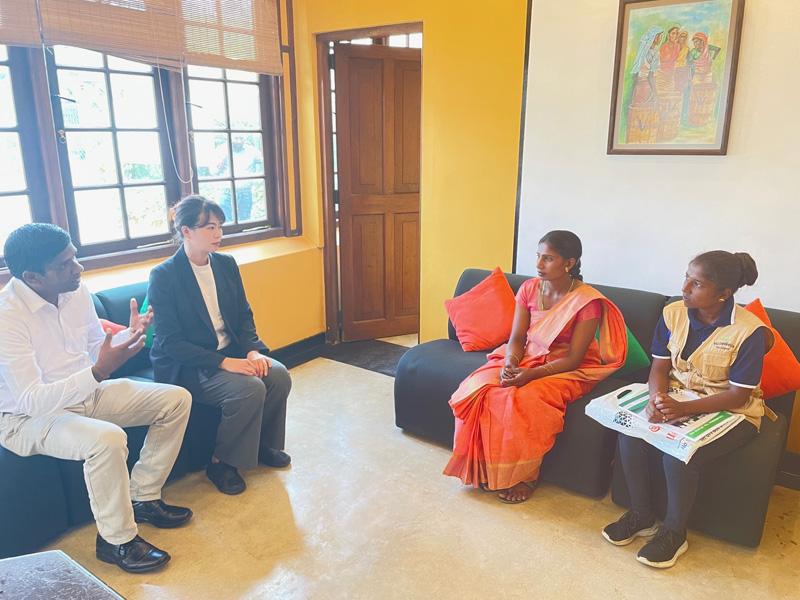
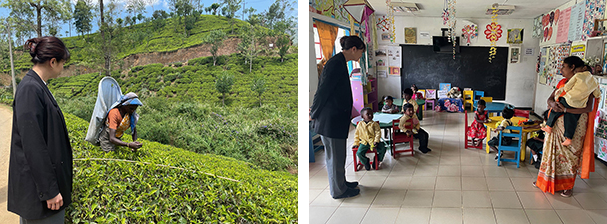
In FY2023, MC visited Mabroc Teas Pvt Ltd. (Mabroc), a tea supplier based in Sri Lanka, to observe on-site operations. Mabroc supplies tea to our group company, MC FOODS Ltd. During the visit, MC conducted on-site interviews at tea farms operated by Mabroc’s group company to assess and confirm the company’s sustainability management system.
MC previously visited Mabroc in 2016. At that time, MC confirmed that Mabroc and its group company placed societal and environmental initiatives at the core of their management values. During the most recent visit, MC confirmed that these initiatives have continued to deepen.
One notable initiative is the appointment of female field managers. For approximately 200 years, due to historical and cultural norms, tea leaves were hand-picked by female workers supervised by male field managers. However, Mabroc has begun appointing female field managers, marking a significant shift. During the visit, MC interviewed on such manager, who expressed how honored she felt to serve in this role and noted that her family, long involved in tea plucking, was proud of her appointment.
The company also provides residential accommodations, medical facilities, and a nursery school for field workers, allowing them to leave their children in a safe environment while they work. MC confirmed that Mabroc continues to take various initiatives that support the well-being of workers who live and work on the plantation.
Meat Processing company in Japan
In FY2022, MC visited a domestic meat processing company that supplied poultry to MC’s subsidiary Foodlink Corporation. This year, an inspector from DNV Business Assurance Japan Co., Ltd., an independent inspection company, accompanied MC to evaluate the supplier’s sustainability management system through interviews with management and employees.
The evaluation was conducted using the Mitsubishi Corporation Supply Chain Checklist, which examines both the validity of the supplier’s sustainability management system and the degree of its implementation. Items related to personnel and labor affairs were generally managed appropriately. However, some policies and procedures had not been documented, and MC requested that these be formalized in writing. With regard to safety, health, and environmental matters, only a small portion of relevant policies and procedures had been documented, and management practices appeared to rely heavily on individual employees. Although employees receive regular education and training and no accidents have occurred to date, MC recommended that the supplier establish and thoroughly communicate formal policies and procedures going forward.
Please refer to the attached report for more details.

Fisheries Cooperative Association of Mitsushima-cho in Japan
In FY2021, MC held an online meeting and interview* with the management team and employees of the Fisheries Cooperative Association of Mitsushima-cho, a tuna supplier (located in Tsushima City, Nagasaki Prefecture) to MC’s subsidiary Toyo Reizo.
During the meeting, MC explained external sustainability-related trends as well as its own sustainability initiatives, including our basic stance on human rights and our efforts to identify and promote sustainable supply chains as a key management priority. This provided an opportunity for participants to deepen their understanding of sustainability and the importance of MC's initiatives.
Through the online interview, MC learned that the company engages in activities that support sustainable fishing, such as collecting debris from the ocean. MC also confirmed that there have been no human rights violations or related issues, due in part to the company’s efforts to maintain an open work environment. Employees performing work with occupational health and safety risks receive appropriate training, and personnel assignments are managed to prevent uneven distribution of workloads.
During the interview, MC confirmed that the company’s internal policies on environmental and social considerations were not clearly documented. MC therefore requested that these policies be clarified in writing to support consistent awareness and to help deepen ongoing sustainability efforts.
Working in partnership with suppliers, MC will continue promoting sustainable practices throughout its supply chains.
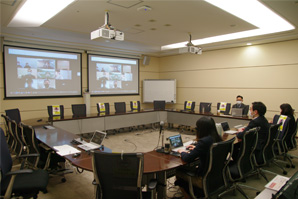
- *This meeting and interview were conducted online due to COVID-19 restrictions.
Site Visits before FY2020
| Year | Industry・Item・Supplier | Country |
|---|---|---|
| FY2020 | Apparel products, garment factory | Japan |
| FY2019 | No visit due to COVID-19 restrictions | ― |
| FY2018 | Fresh and processed poultry products, factory | Thailand |
| FY2017 | Apparel products, garment factory Seafood, aquaculture and processing | Vietnam |
| FY2016 | Coffee plantation, milling plant | Colombia |
| FY2015 | Tea plantation | Sri Lanka |
| FY2014 | Coffee plantation | Brazil |
| FY2013 | Shrimp hatchery and processing factory | Thailand |